Hail Damage Repair Detroit Michigan
Professional hail damage repair for cars, trucks and SUVs damaged by Michigan hailstorms.
Hail can leave dozens or even hundreds of dents across the hood, roof, trunk, doors, fenders and other exterior panels. The appropriate repair depends on the size, depth, location and number of dents, the condition of the paint, and the construction of the affected panels.
Professional Hail Damage Repair in Detroit Michigan
Hail damage can range from several small dents to widespread damage across nearly every upward-facing panel of a vehicle. Our team evaluates the complete vehicle to determine the extent of the hail damage and the appropriate repair approach.
Hood Hail Damage
Hoods are commonly damaged during hailstorms because of their large horizontal surface. Dent size, location, panel material and paint condition all affect the repair method.
Roof Hail Damage
Vehicle roofs can receive extensive hail damage. Repair planning may require consideration of roof access, headliner removal and surrounding components.
Trunk & Liftgate Damage
Trunk lids and liftgates may develop multiple dents during a storm and should be inspected along with the rest of the vehicle.
Door Hail Damage
Upper door surfaces and exterior door panels can be affected depending on the direction and severity of the hailstorm.
Fender Damage
Front and rear fender areas may contain smaller hail dents that require careful inspection under proper lighting.
Paint Damage
Larger hailstones can damage the paint surface in addition to denting the panel, which may require conventional body repair and refinishing.
What Can Be Damaged During a Hailstorm?
Hailstorms can affect more than painted sheet metal. The complete exterior of the vehicle should be considered when evaluating storm damage.
Body Panels
Hoods, roofs, doors, fenders, quarter panels, trunks and liftgates can all sustain hail dents.
Windshield & Glass
Larger hailstones can chip, crack or break windshields, back glass, sunroofs and other vehicle glass.
Exterior Trim
Moldings, roof trim, weatherstrips and other exterior components can also be damaged during severe weather.
Headlights & Taillights
Vehicle lamps and lenses should be inspected for cracks, chips and other storm-related damage.
Mirrors
Mirror housings, glass and integrated electronics can be damaged by larger hailstones.
Paint Finish
Paint chips or fractures can change the appropriate repair method compared with dents where the original finish remains intact.
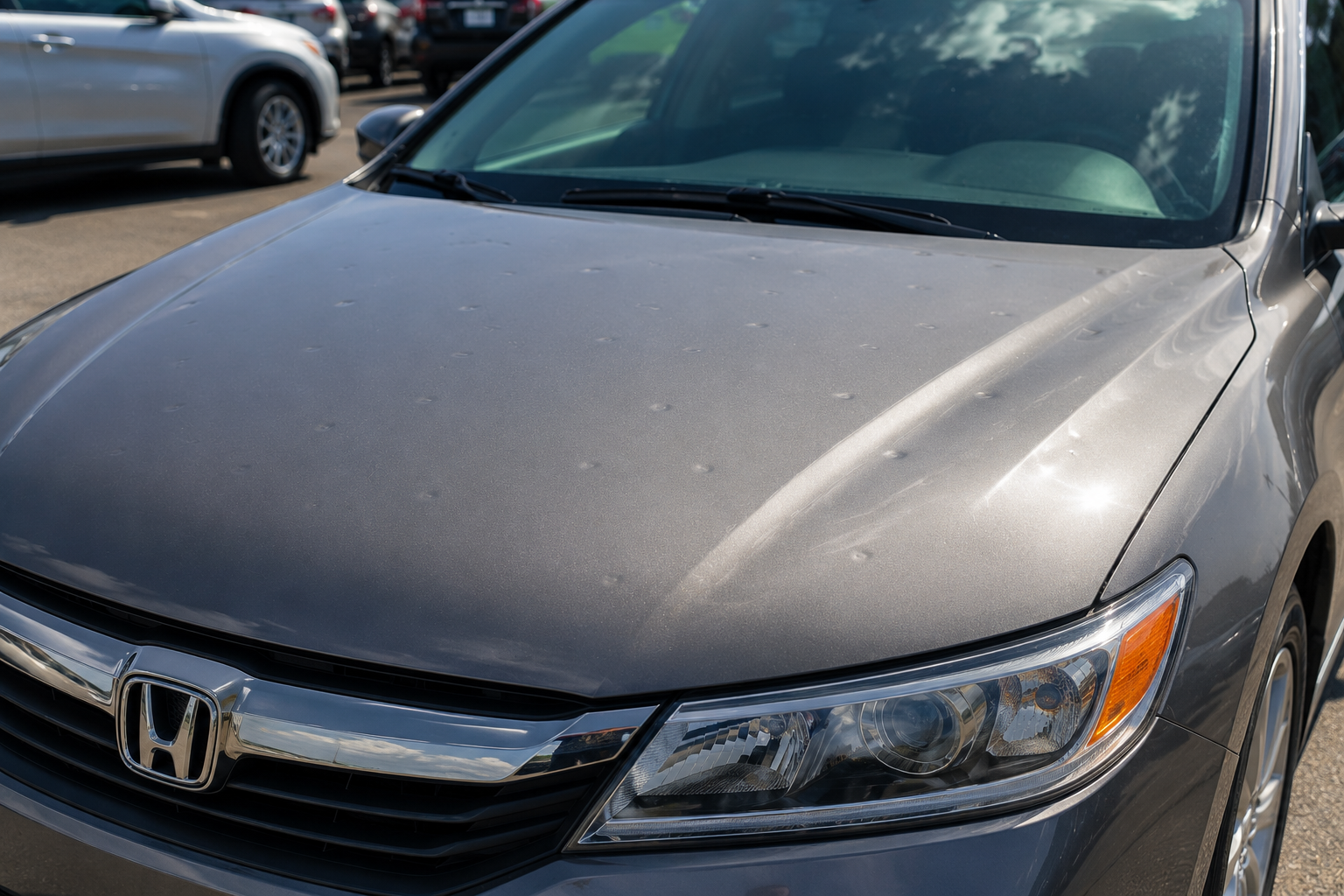
Every Hail-Damaged Vehicle Needs an Individual Repair Plan
No two hailstorms damage a vehicle exactly the same way. One vehicle may have a handful of shallow dents while another may have dozens of dents across the hood, roof, trunk, doors and fenders.
The repair method depends on the size, depth and location of the dents, accessibility behind the damaged panel, the material of the panel and whether the original paint finish remains intact.
Our Detroit Michigan hail damage repair process begins with a detailed inspection so the appropriate repair method can be determined for each damaged area.
Paintless Dent Repair vs. Conventional Hail Damage Repair
Hail damage does not always require the same repair method. Depending on the condition of the panel and paint, some dents may be candidates for paintless dent repair while other areas may require conventional body repair and refinishing.
Paintless Dent Repair
Paintless dent repair may be considered when the original paint remains intact and the dent can be accessed and restored without conventional body filler and refinishing.
- Original paint remains intact
- Shallow or moderate hail dents
- Panel remains suitable for PDR
- Backside access is available when required
- Dent location allows proper repair
- No severe paint cracking or panel damage
Conventional Body Repair
Conventional repair may be necessary when hail damage is too severe for paintless dent repair or when the paint surface has been damaged.
- Deep or sharp dents
- Paint damage
- Cracked or chipped finish
- Stretched metal
- Severe panel deformation
- Panel replacement when required
Our Detroit Hail Damage Repair Process
The exact process varies by vehicle and severity of damage, but a professional hail damage repair generally begins with a complete inspection and repair plan.
Complete Vehicle Inspection
We inspect the hood, roof, trunk, doors, fenders, quarter panels, glass, lights, trim and other exterior areas for hail-related damage.
Damage Documentation
Hail dents and other storm-related damage are identified and documented for repair planning and, when applicable, the insurance claim.
Repair Method Evaluation
Each damaged area is evaluated to determine whether paintless dent repair, conventional body repair, refinishing or panel replacement is appropriate.
Insurance Coordination
When the damage is being handled through insurance, repair documentation and additional damage information may be provided for insurance review.
Hail Damage Repair
Approved repairs are completed using the appropriate repair method for the affected panels and components.
Paint & Refinishing When Required
Panels requiring conventional repair are prepared, color matched and professionally refinished.
Reassembly
Interior trim, headliners, moldings or other components removed for access are reinstalled as applicable.
Final Inspection
The repaired vehicle is reviewed for panel appearance, finish quality, reassembly and the completion of the approved repair work.
Why Proper Lighting Matters During a Hail Inspection
Small hail dents can be difficult to see under ordinary lighting. Proper inspection lighting and viewing angles help identify subtle dents that may otherwise be missed, especially across large areas such as the hood and roof.
How the Insurance Process Works for Hail Damage
Hail damage is commonly handled under the comprehensive portion of an auto insurance policy when the loss is covered. The exact coverage, deductible and claim process depend on the customer's individual policy and insurance company.
Document the Hail Damage
Photograph the vehicle after the storm, including the hood, roof, trunk, sides, glass and any visibly damaged trim or lighting.
Contact Your Insurance Company
Report the hail loss and obtain your claim number. Your insurer may ask when and where the storm occurred and may schedule an inspection or request photographs.
Schedule a Professional Hail Inspection
An insurance estimate may be based on visible damage, but a collision repair facility can perform a more detailed inspection under appropriate lighting and identify dents that may be difficult to see outdoors.
Review the Repair Method
The vehicle is evaluated to determine which dents may be suitable for paintless dent repair and which areas require conventional body repair, refinishing or panel replacement.
Additional Damage May Be Documented
If the repair facility identifies additional hail damage or necessary repair operations that were not included on the initial insurance estimate, additional documentation may be submitted to the insurer for review.
Repair Authorization
Once the repair plan, insurance process and customer authorization are in place, the approved hail damage repair can begin.
Repair & Refinishing
Paintless dent repair, conventional body repair, panel replacement, refinishing or a combination of repair methods may be used depending on the damage.
Final Inspection
The vehicle is inspected after the approved repair work is complete to review panel appearance, paint finish and reassembly.
When Hail Damage Is Too Severe for Paintless Dent Repair
Paintless dent repair can produce excellent results on the right type of hail damage, but it is not automatically the correct repair method for every dent.
Hailstones can create dents that are extremely sharp, deep or concentrated. When the metal has been severely stretched or the center of the dent is too sharp, attempting to manipulate the panel entirely with PDR may not restore the original contour to an acceptable appearance.
The condition of the paint also matters. If the impact has cracked, chipped or otherwise damaged the finish, preserving the original paint through PDR may no longer be possible.
In these situations, conventional body repair may provide a better final result. That can involve metal repair, appropriate body materials, surface preparation, primer, color matching and professional refinishing.
Can a Vehicle Have Too Many Dents for PDR?
Yes. Dent count alone does not determine the repair, but the number, density, severity and location of the dents can make conventional body repair or panel replacement a more appropriate option.
Extremely High Dent Count
When a hood, roof or other panel contains a very large number of overlapping or closely spaced dents, restoring every individual dent through PDR may not produce the best overall panel appearance.
Overlapping Damage
Closely spaced impacts can distort larger areas of the panel. Instead of separate clean dents, the surface may become generally wavy or stretched.
Panel Shape Matters
Body lines, edges, braces and complex panel contours can make severe hail damage more difficult to restore exclusively through paintless dent repair.
Quality of the Final Result
The goal is not simply to make dents smaller. The repair method should be selected based on which approach is most likely to restore the panel's shape and appearance properly.
Conventional Repair May Look Better
On severely damaged panels, conventional metal repair and refinishing can sometimes provide a more consistent final surface than attempting PDR on every individual dent.
Replacement May Be Considered
If a panel is extensively damaged or cannot be restored appropriately, panel replacement may be evaluated as part of the repair plan.
Some Hail-Damaged Vehicles Need More Than One Repair Method
A vehicle can have several different levels of hail damage at the same time. For example, shallow roof dents may be suitable for paintless dent repair while a sharply damaged hood requires conventional body repair or replacement.
A complete repair plan can combine PDR, conventional metal repair, panel replacement, glass replacement, trim replacement and refinishing when appropriate.
This is why our Detroit hail damage repair process begins with the entire vehicle rather than assuming every hail dent should automatically be repaired the same way.
Why the Insurance Estimate May Change
The first hail damage estimate may not always include every dent or every operation required to complete the repair.
Initial Insurance Estimate
An insurer may prepare the first estimate from photographs, an inspection or other claim information. Small dents can be difficult to identify without specialized lighting, and the complete repair method may not yet be known.
Repair Facility Inspection
Once the vehicle is inspected under appropriate conditions, additional dents, damaged trim, glass damage or repair operations may be identified. Additional documentation can then be provided to the insurer for review when appropriate.
Do You Pay a Deductible on a Hail Damage Claim?
Whether a deductible applies and the amount of that deductible depend on the customer's individual insurance policy and coverage.
A deductible is generally the portion of a covered repair that the policy requires the customer to pay before the insurer pays the remaining covered amount, subject to the terms of the policy.
Customers should confirm their comprehensive coverage and deductible directly with their insurance company when opening a hail damage claim.
Detroit Michigan Hail Damage Repair FAQ
Answers to common questions from Detroit and Metro Detroit vehicle owners after a hailstorm.
Can all hail dents be repaired with paintless dent repair?
No. PDR is highly effective for many hail dents, but the appropriate repair depends on dent depth, sharpness, location, metal stretch, panel access and the condition of the paint.
What happens if a hail dent is too sharp for PDR?
Extremely sharp dents can severely stretch the metal. If the panel cannot be restored properly with PDR, conventional body repair, refinishing or panel replacement may be a better repair method.
Can there be too many hail dents to use PDR?
A high dent count does not automatically prevent PDR, but severe, overlapping or extremely dense hail damage can make conventional repair or panel replacement more appropriate for the final appearance.
What if PDR removes the dents but the panel still looks wavy?
Waviness can indicate broader panel distortion or stretched metal. The repair should be evaluated based on the overall panel surface, not simply whether individual dents can be reduced.
Can one vehicle use PDR and conventional body repair?
Yes. Different panels can require different repair methods. One area may be suitable for PDR while another requires metal repair, refinishing or replacement.
Does hail damage insurance cover PDR?
Hail damage is commonly handled under comprehensive coverage when the loss is covered. Whether PDR or another repair method is paid depends on the policy, the damage and the insurer's claim review.
What if the insurance estimate misses some of the hail dents?
Additional dents may become visible during a detailed repair-facility inspection. When appropriate, additional documented damage or repair operations may be submitted to the insurer for review.
Do I have to use the body shop my insurance company recommends?
You can discuss your preferred repair facility with your insurance company and choose a repair facility you are comfortable working with.
Will hail damage crack my vehicle's paint?
It can. Larger or sharper impacts may damage the finish. If the paint is cracked or chipped, conventional body repair and refinishing may be necessary.
Can hail damage break a windshield or sunroof?
Yes. Severe hail can chip, crack or break windshields, back glass, sunroof panels and other vehicle glass.
Can a hail-damaged hood need replacement?
Yes. If the hood has severe dent density, stretched metal, sharp impacts, damaged paint or other conditions that make repair impractical, replacement may be considered.
How long does hail damage repair take?
Repair time depends on the number and severity of dents, repair method, parts availability, insurance approvals, refinishing requirements and the amount of disassembly required.
Should I repair hail damage if the vehicle still drives normally?
Drivability and exterior condition are separate issues. Hail can damage body panels, glass, lights, trim and paint even though the vehicle continues to drive normally. A professional inspection can help determine the extent of the damage.
Can I get an online hail damage estimate?
You can submit photographs and vehicle information for a preliminary review. Hail dents can be difficult to photograph, so an in-person inspection may still be necessary before the complete repair plan is known.
Does an online estimate guarantee the final hail repair price?
No. An online estimate is preliminary because some hail dents and related storm damage may not be visible in photographs. The repair plan can change after a complete physical inspection.
Need Hail Damage Repair in Detroit Michigan?
Contact The Collision Repair Shop for a professional hail damage inspection. We can evaluate whether your vehicle is suitable for paintless dent repair, conventional body repair, refinishing, panel replacement or a combination of repair methods and assist with the insurance claim process.