Ford Collision Shop Michigan
Professional collision and auto body repair for Ford cars, trucks, SUVs, hybrids and electric vehicles.
Modern Ford vehicles combine advanced body construction, structural components, electronics, restraint systems, cameras, radar, sensors and driver-assistance technology. After an accident, our goal is to evaluate the complete vehicle and develop a repair plan based on the actual damage rather than simply repairing what is immediately visible.
Looking for a Ford Collision Shop Near You?
If your Ford has been damaged in an accident, choosing the right collision repair facility matters. The Collision Repair Shop provides professional Ford collision repair from our location at 836 E 9 Mile Rd in Ferndale, Michigan.
Your Ford Is More Than the Damage You Can See
Collision forces can travel beyond a damaged bumper, fender or door. Components behind exterior panels, structural areas, suspension parts, restraint systems, wiring, cameras and sensors may also require evaluation. Our repair approach considers the complete damaged area before the repair is finalized.
A Ford Collision Repair Should Be More Than Cosmetic
Making the exterior look good is important, but appearance is only one part of collision repair. The structure, safety systems, electronics, mechanical components and corrosion protection can also matter depending on the location and severity of the accident.
Complete Damage Inspection
We evaluate the visible collision damage along with surrounding components that may have been affected by the impact.
Repair Planning
Repair versus replacement decisions should take into account the Ford model, component, construction material, damage severity and applicable repair information.
Structural Evaluation
When collision forces reach structural areas, additional inspection and measuring may be necessary before the repair can be completed.
Electronic Systems
Modern Ford vehicles can contain numerous control modules, cameras, radar units, parking sensors and other electronic systems that may be affected during a collision.
Paint & Refinishing
Repaired or replaced exterior panels may require surface preparation, color matching, paint application and clear coat to restore the vehicle's finish.
Final Quality Review
Panel fit, alignment, paint appearance, trim installation and completion of applicable post-repair procedures are part of the final repair review.
Ford Collision Damage We Repair
Different collision directions create different repair challenges. We evaluate the affected systems and components based on the actual accident damage.
Ford Front-End Collision Repair
Front-end damage can involve the bumper, grille, hood, fenders, headlights, cooling components, front structure, suspension and electronic safety systems.
Ford Rear-End Collision Repair
Rear impacts may affect the bumper system, tailgate or liftgate, trunk, rear body structure, quarter panels, lamps, sensors and exhaust components.
Ford Side-Impact Repair
Side impacts can involve doors, rocker panels, pillars, quarter panels, side-impact structures, seat belts, airbags and surrounding components.
Ford Bumper Repair
Bumper damage may involve more than the visible cover. Reinforcement, absorbers, brackets, sensors and components behind the bumper may also require inspection.
Ford Fender & Door Repair
Fender and door damage can affect panel alignment, hinges, mirrors, glass, moldings, wiring and adjoining body panels.
Ford Structural Repair
Structural collision damage requires careful repair planning because rails, frames, rockers, reinforcements and other components contribute to the vehicle's overall structure.
Side Damage Can Reach Far Beyond the Doors
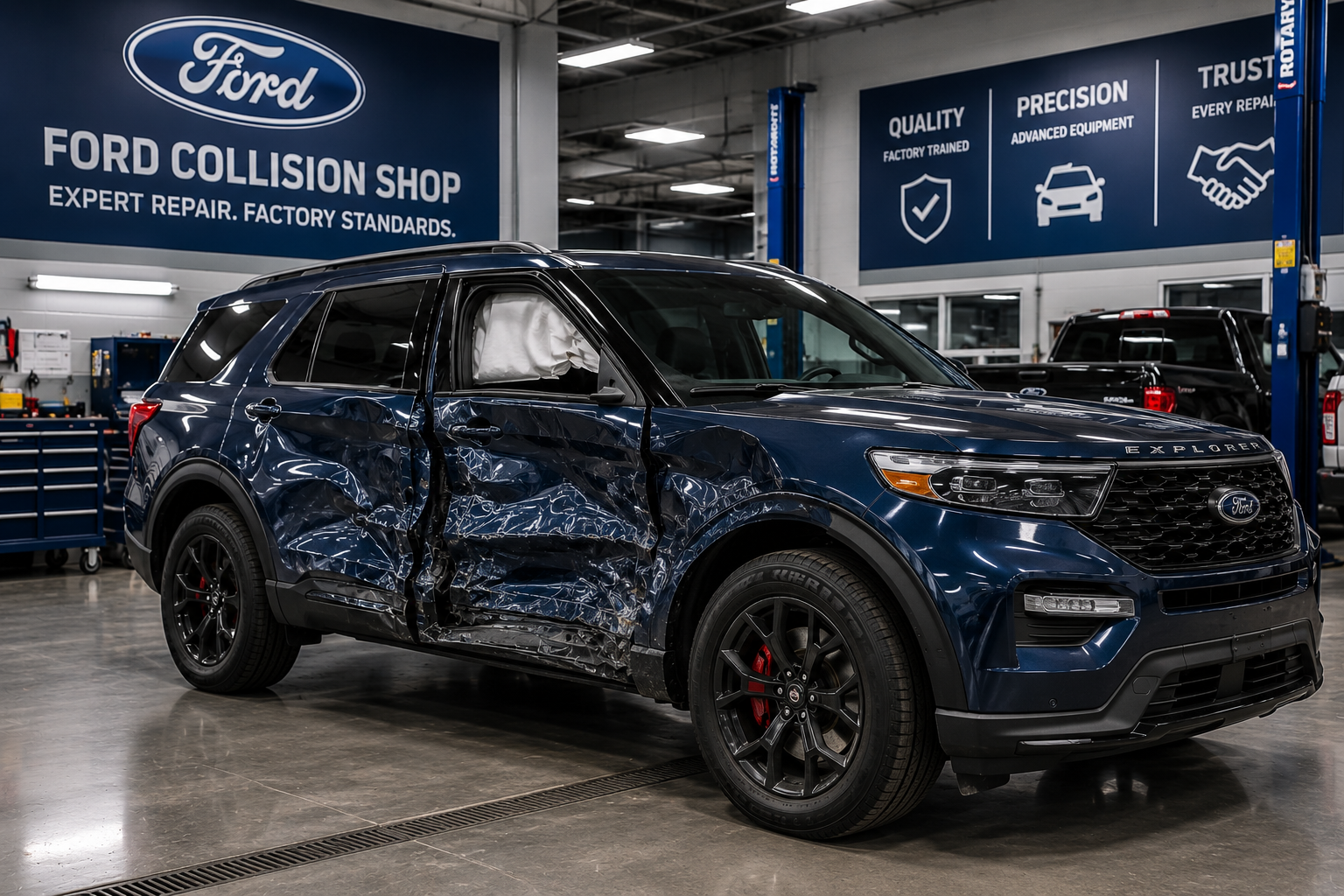
A severe side impact can damage much more than the exterior door skins. Collision forces may reach the door structure, rocker panel, center pillar, quarter panel, floor, seat mounting areas and surrounding structural components.
Side collisions can also involve airbags, seat-belt systems, wiring, sensors, glass, mirrors and electronic systems depending on the Ford model and severity of the accident.
Our Ford Collision Shop Michigan evaluates the complete damaged area so the repair plan is based on what the collision actually affected rather than simply replacing the most visibly damaged panel.
Modern Ford Vehicles Require More Than Traditional Body Work
Ford vehicles can use different combinations of steel, high-strength steel, ultra-high-strength materials and aluminum depending on the model, year and component. The construction of the damaged area can directly affect the appropriate repair procedure.
Structural Damage
Collision forces can reach rails, aprons, pillars, rocker panels, floor areas, reinforcements and other components that contribute to vehicle structure and crash-energy management.
High-Strength Materials
Different structural materials can have specific repair limitations. The damaged component and material should be identified before determining whether repair or replacement is appropriate.
Structural Measuring
When an impact reaches structural areas, measuring may be necessary to evaluate vehicle dimensions and help determine the extent of collision-related movement.
Welding & Joining
Structural component replacement can involve specific welding, riveting, bonding, adhesives, fasteners or other joining methods depending on the Ford vehicle and component.
Corrosion Protection
Repairing or replacing body components can disturb original coatings, sealers and corrosion protection. These areas must be considered during the repair process.
Panel Fit & Alignment
Hood, fender, door, quarter-panel, tailgate and liftgate alignment all contribute to the appearance and completeness of the finished repair.
Aluminum Changes the Collision Repair Process
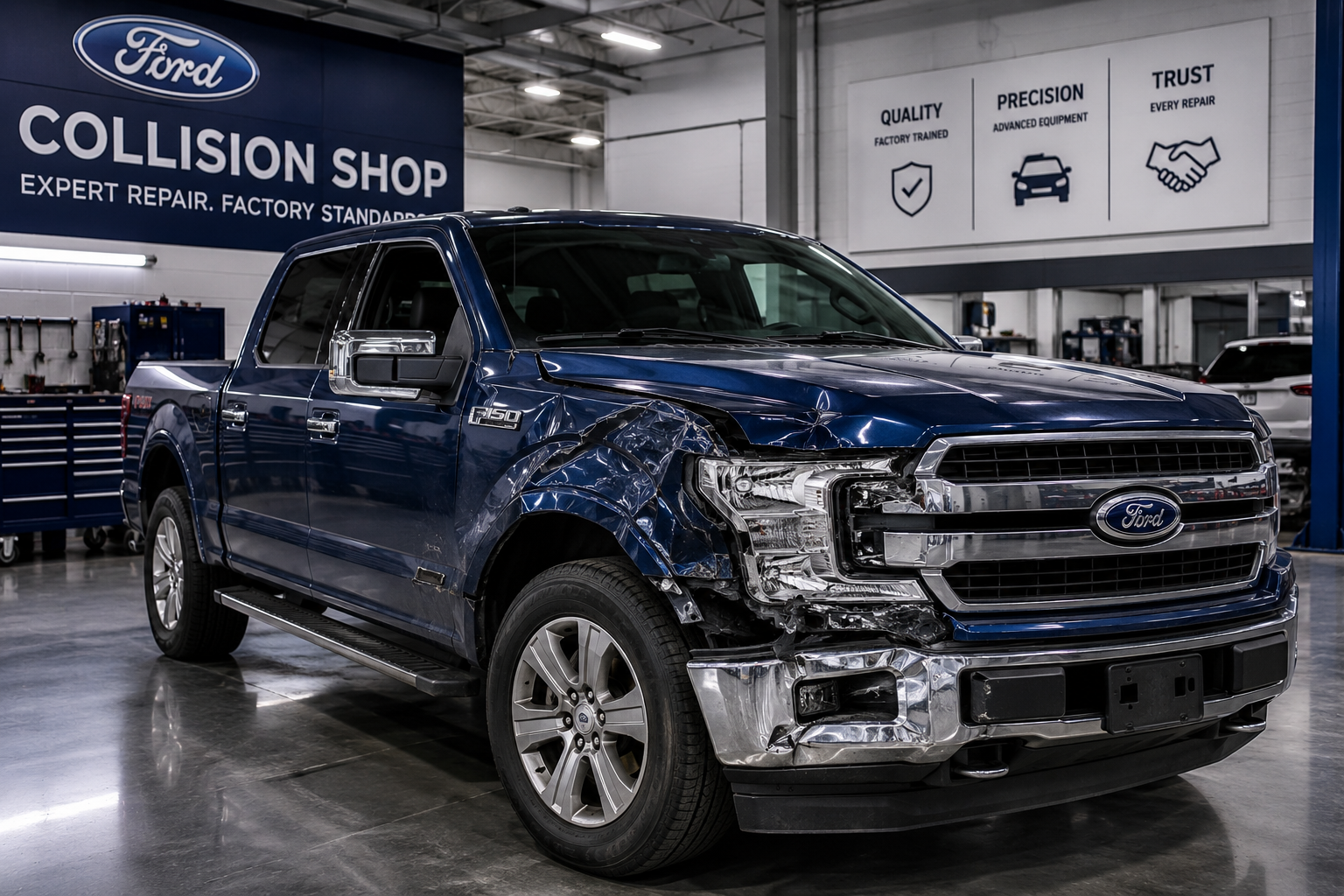
Ford's use of aluminum body construction on vehicles such as the F-150 introduced repair considerations that differ from conventional steel exterior-panel repair.
Aluminum repair requires attention to material identification, contamination control, repairability, joining methods, adhesives, fasteners and the equipment appropriate for the affected component.
A damaged Ford F-150 may also require inspection of underlying structural components, suspension, steering, cooling systems, lamps, sensors and other equipment depending on the location and severity of the collision.
This is why a Ford truck should be evaluated as a complete vehicle rather than assuming that replacing the visibly damaged aluminum panel completes the collision repair.
A Ford Can Have Collision-Related Faults You Cannot See
Modern Ford vehicles contain interconnected electronic systems. A dashboard without warning lights does not necessarily mean every collision-related electronic system is operating without a stored fault.
Pre-Repair Diagnostic Scan
A pre-repair scan can establish a diagnostic baseline and identify stored trouble codes or electronic conditions that should be considered while developing the repair plan.
Post-Repair Diagnostic Scan
A post-repair scan can help determine whether faults remain after repairs and whether additional diagnostic, initialization or calibration procedures are necessary.
Warning Lights Do Not Tell the Whole Story
Some electronic faults may be stored without immediately illuminating a warning light, which is one reason diagnostic scanning can be important following collision damage.
Cameras, Radar & Sensors Can Be Part of the Collision Repair
Many Ford vehicles use cameras, radar units, ultrasonic sensors and electronic control modules to support driver-assistance and convenience systems.
These components may be mounted in or near bumpers, grilles, windshields, mirrors, quarter panels and other areas commonly affected during collision repair.
Removing, replacing or disturbing certain components can create the need for inspection, initialization or calibration depending on the vehicle and repair operation.
A complete Ford collision repair therefore needs to consider both the visible body damage and the electronic systems associated with the repaired area.
Our Ford Collision Shop Michigan repairs collision-damaged Ford vehicles across a wide range of models and configurations. The repair plan is based on the specific year, model, construction, equipment and location of the collision damage. Ford F-150 collision repair involving aluminum exterior body panels, bumpers, beds, doors, fenders, lighting, suspension, structure and accident-related electronic systems. Collision and body repair for Ford Super Duty trucks, including F-250, F-350 and other configurations with front, rear, side, bed and structural damage. Ford Ranger collision repair for bumpers, fenders, hoods, doors, pickup beds, tailgates, lighting, suspension and structural damage. Ford Maverick collision repair for front-end, rear-end and side-impact damage involving body panels, truck-bed areas, lighting and related components. Collision repair for electric Ford F-150 Lightning trucks with consideration for body structure, high-voltage systems, electronic components and collision-related damage. Collision repair evaluation for applicable Ford commercial truck and chassis configurations with accident-related body and structural damage. Ford Explorer collision repair for front, rear and side impacts involving doors, rocker areas, quarter panels, bumpers, liftgates, structure and restraint systems. Collision and auto body repair for Ford Expedition SUVs involving bumpers, doors, quarter panels, liftgates, structural areas and surrounding components. Ford Bronco collision repair for body panels, doors, fenders, bumpers, hard-top related areas, suspension and other accident-damaged components. Ford Bronco Sport collision repair involving bumpers, hoods, fenders, doors, quarter panels, liftgates, lighting and structural areas. Ford Escape collision repair for gasoline and hybrid configurations involving exterior body panels, bumpers, liftgates and accident-related systems. Collision repair for Ford Edge vehicles and previous model years involving body, bumper, door, quarter panel, liftgate and structural damage. Ford Mustang collision repair involving bumpers, hoods, fenders, doors, quarter panels, suspension, structural components and professional refinishing. Collision repair for Ford Fusion vehicles involving front-end, rear-end and side-impact body damage, paint and structural components. Auto body and collision repair for Ford Focus vehicles with bumper, fender, hood, door, quarter panel and other accident-related damage. Collision repair for Ford Mustang Mach-E electric vehicles with consideration for exterior body damage, structure, high-voltage systems, sensors and electronics. Collision and auto body repair for Ford Escape Hybrid vehicles with consideration for hybrid components and collision-related electronic systems. Collision repair for Ford Escape Plug-In Hybrid vehicles involving body, structural, electronic and high-voltage-system considerations. Ford Transit collision repair for cargo and passenger configurations involving front-end, side, rear body, doors and structural components. Collision repair for electric Ford E-Transit vehicles with consideration for commercial body configurations, structure and high-voltage components. We can inspect other Ford vehicles and previous model years to determine the appropriate collision and auto body repair process. An F-150, Explorer, Mustang, Bronco and Mustang Mach-E should not automatically be repaired the same way. Ford vehicles can differ in body materials, structural construction, restraint systems, cameras, sensors, powertrains and repair requirements. Our Ford Collision Shop Michigan evaluates the specific vehicle and collision damage before determining the appropriate repair approach. Ford Collision Repair for Trucks, SUVs, Cars & Electric Vehicles
Ford Trucks
Ford F-150
Ford Super Duty
Ford Ranger
Ford Maverick
Ford F-150 Lightning
Ford Commercial Trucks
Ford SUVs & Crossovers
Ford Explorer
Ford Expedition
Ford Bronco
Ford Bronco Sport
Ford Escape
Ford Edge
Ford Cars & Performance Vehicles
Ford Mustang
Ford Fusion
Ford Focus
Ford Electric & Hybrid Vehicles
Ford Mustang Mach-E
Ford Escape Hybrid
Ford Escape Plug-In Hybrid
Ford Vans & Commercial Vehicles
Ford Transit
Ford E-Transit
Other Ford Models
Every Ford Model Requires Its Own Repair Plan
Why Ford Owners Choose The Collision Repair Shop
A collision repair should give the vehicle owner confidence in more than the paint finish. Our Ford Collision Shop Michigan focuses on the complete repair process, from damage analysis and repair planning to structural work, refinishing, electronic procedures and final inspection.
We Look Beyond the Visible Damage
Collision forces can travel behind bumpers, body panels, lamps and trim. We inspect the surrounding areas so the repair plan is not based only on what is immediately visible.
We Treat Every Ford Differently
An F-150, Explorer, Mustang, Bronco and Mustang Mach-E can differ significantly in construction, systems and repair requirements. The repair should match the actual vehicle.
We Take Structural Damage Seriously
Structural measurements, material identification, repair-versus-replacement decisions, joining procedures and corrosion protection all deserve careful attention.
We Respect Modern Electronics
Cameras, radar, sensors, restraint systems and vehicle modules can all be affected by collision damage or repair operations and may require diagnostic procedures.
We Work With Insurance Companies
We assist customers with estimates, repair documentation, additional damage and insurance supplements when appropriate during the Ford collision repair process.
We Focus on Quality From Start to Finish
Body fit, structural condition, paint appearance, reassembly, diagnostics and final inspection all contribute to the quality of the completed repair.
Your Ford Should Be Repaired Around the Vehicle — Not Around the Fastest Shortcut
The outside of a repaired vehicle may look perfect while some of the most important work remains hidden underneath. Our Ford Collision Shop Michigan believes repair integrity comes from paying attention to the complete vehicle: the structure, body materials, safety systems, electronics, corrosion protection, panel fit, paint finish and every operation that contributes to the final repair.
Your Ford Deserves More Than a Body Shop That Simply Makes the Damage Disappear.
It deserves a collision repair team that takes the vehicle seriously. Whether you drive an F-150, Explorer, Bronco, Mustang, Super Duty, Maverick, Ranger, Expedition, Mustang Mach-E or another Ford model, The Collision Repair Shop is ready to provide professional repair planning, quality workmanship and clear communication from the first inspection through final delivery.