Paint & Auto Body Repair Southfield MI
Professional collision body repair, panel restoration, paint preparation, color matching and automotive refinishing for Southfield Michigan drivers who expect a high-quality finished repair.
A beautiful paint finish begins long before the first coat of color is sprayed. Proper auto body repair can involve metal repair, panel replacement, dent correction, body filler, sanding, feather edging, primer, sealer, masking, color evaluation, basecoat, blending, clear coat and final polishing. The Collision Repair Shop approaches paint and body repair as one complete process — because even the best paint cannot hide poor body preparation underneath.
High-Quality Collision Repair Is Built From the Surface Up
Paint is the part customers notice first, but what happens underneath the paint determines whether the finished repair looks smooth, consistent and professionally completed.
Collision Body Repair
Repair of accident-damaged exterior panels using appropriate body-repair techniques based on the panel and severity of the damage.
Dent Repair
Repair of dents, creases and impact damage when the panel is suitable for repair.
Bumper Repair
Repair and refinishing of collision-damaged bumper covers when the type and extent of damage make repair appropriate.
Panel Replacement
Replacement may be appropriate when damage severity, material or repair requirements make repairing the existing panel unsuitable.
Scratch Repair
Scratches can range from clear-coat surface damage to deeper damage extending into color, primer or the underlying panel.
Scuff & Paint Transfer Repair
Parking accidents and minor impacts can leave scuffs or transferred paint that require evaluation to determine the correct repair approach.
Hood Repair
Collision-damaged hoods can require dent repair, panel preparation, refinishing or replacement depending on the damage.
Fender Repair
Fender repairs include restoring the damaged area and maintaining proper alignment with the hood, door, bumper and lamps.
Door & Quarter Panel Repair
Side-impact and parking damage can require repair or replacement followed by careful refinishing and alignment.
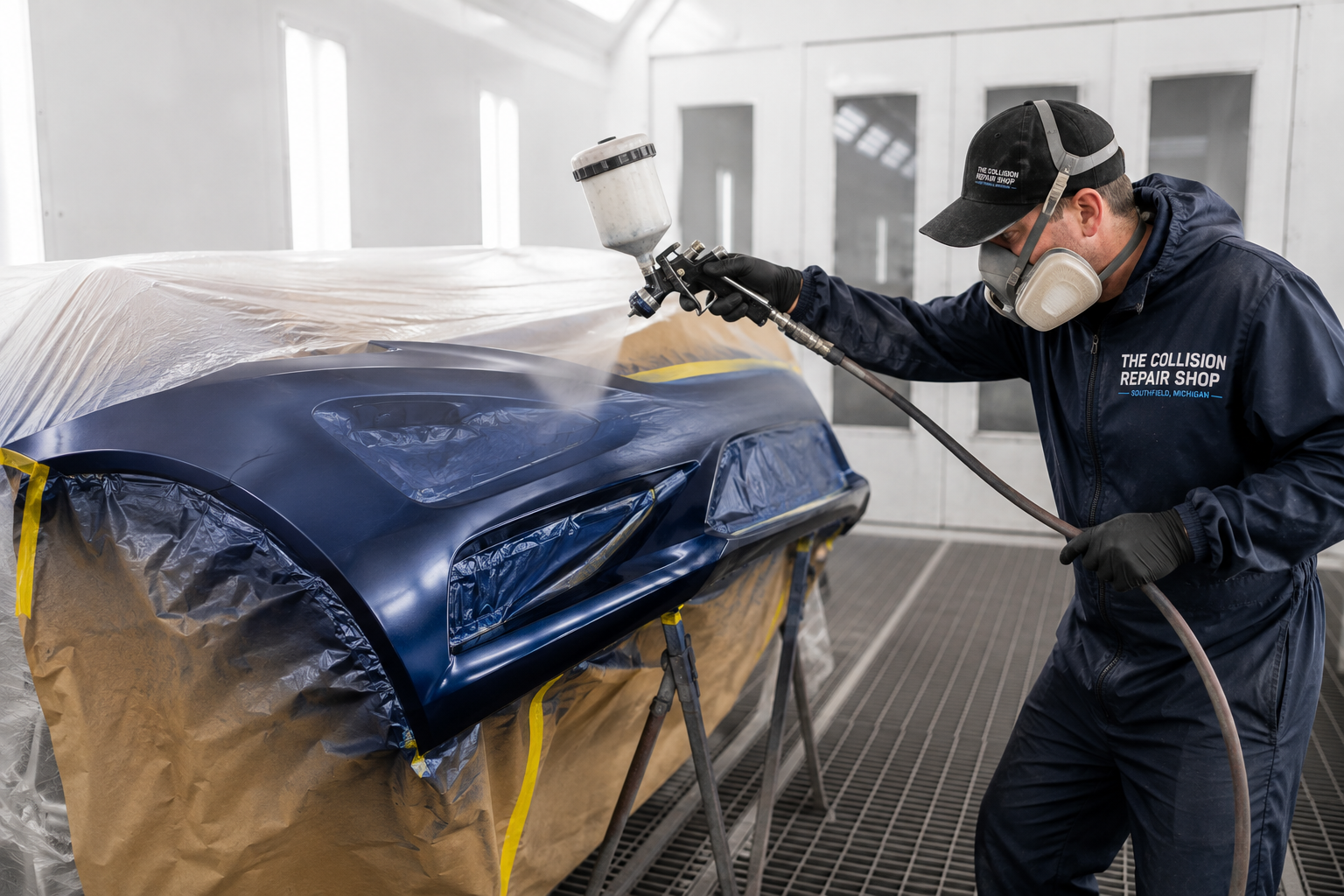
A Beautiful Paint Finish Starts With Proper Body Preparation
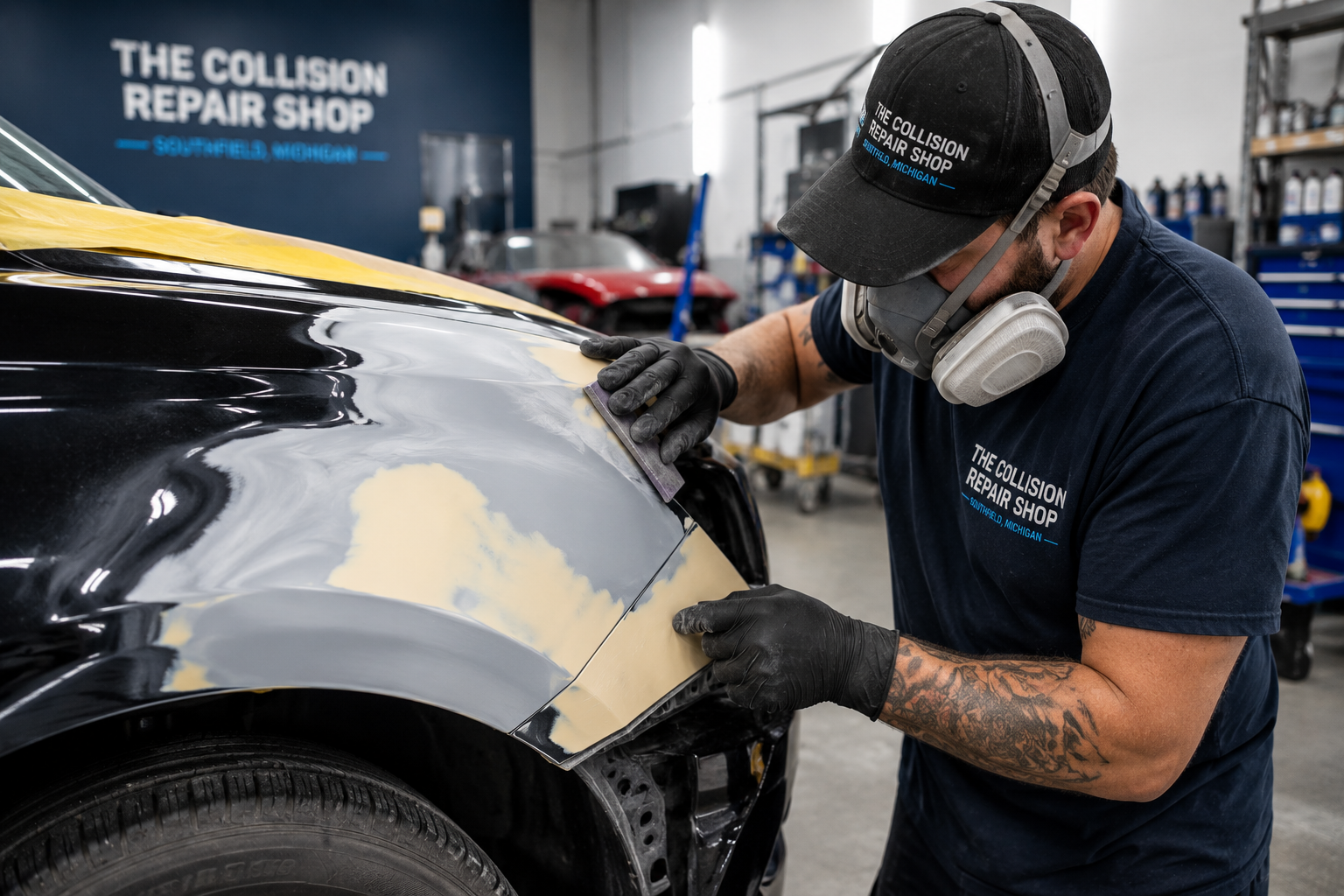
Before color is applied, the repaired surface must be prepared correctly. That can involve metal work, body filler, sanding, feather edging, primer and repeated surface inspection.
Tiny imperfections beneath the paint can become much more noticeable after glossy clear coat is applied. That is why preparation is one of the most important stages of professional collision refinishing.
Our goal is not simply to spray color over a damaged area. The goal is to create the best possible foundation for the final finish.
What Happens Before Automotive Paint Is Applied?
Refinishing begins after the damaged panel has been repaired or replaced. The surface then goes through multiple preparation stages before color and clear coat are applied.
Metal Repair
Dented or distorted metal may require reshaping before surface refinishing can begin.
Body Filler
When appropriate, body filler can be used to help restore contour after underlying metal repair.
Block Sanding
Sanding helps refine the panel surface and identify remaining high or low areas before refinishing.
Feather Edging
Existing coating edges may be carefully transitioned to create a smooth surface around the repaired area.
Primer
Primer can provide a refinishing foundation and help prepare repaired surfaces for later coating stages.
Primer Sanding
Primer may be sanded and refined to help produce a smooth surface before sealer and color are applied.
Sealer
Sealer can help create a consistent substrate prior to basecoat application depending on the repair and paint system.
Masking
Adjacent vehicle areas are carefully protected from unwanted overspray during the refinishing process.
Final Surface Inspection
The panel is reviewed before spraying because surface quality becomes increasingly visible once gloss is applied.
Why Can't a Body Shop Simply Paint Over a Dent or Scratch?
Automotive paint follows the surface underneath it. If that surface is uneven, cracked, improperly repaired or poorly prepared, the finished coating can reveal those imperfections.
A professional refinishing process therefore begins by addressing the underlying damage first.
Deeper scratches may require feather edging and primer. Dents may require metal work and filler. Replacement panels may require appropriate preparation before color is applied.
The quality of the body repair and preparation stage directly affects how the final finish looks under sunlight, indoor lighting and different viewing angles.
Matching Automotive Paint Is More Complicated Than Reading the Paint Code
A paint code identifies the general vehicle color, but two vehicles with the same paint code do not always appear visually identical.
Manufacturing variation, age, environmental exposure and previous refinishing can all influence how a color appears on the vehicle.
Metallic colors can also change appearance based on how metallic particles orient in the coating. Pearl colors can involve multiple layers that influence depth and tone.
Professional collision refinishing therefore involves evaluating the actual vehicle, not simply selecting a formula and assuming the result will automatically match.
Solid, Metallic, Pearl & Multi-Stage Paint
Different automotive finishes behave differently during application and color matching. That is one reason modern collision refinishing requires both technical knowledge and visual judgment.
Solid Colors
Solid automotive colors generally do not rely on metallic flakes or pearl particles for their visual appearance.
Metallic Colors
Metallic finishes contain reflective particles whose orientation can influence brightness and appearance.
Pearl Colors
Pearl finishes use additional effect pigments that can create depth and color movement under different lighting.
Multi-Stage Finishes
Certain colors use multiple coating stages that must work together to create the intended final appearance.
Why Does Collision Paint Sometimes Extend Beyond the Damaged Panel?
Customers sometimes ask why a repair may involve refinishing an adjoining panel that was not physically damaged in the accident.
Depending on the vehicle color and repair situation, blending can be used to create a gradual color transition into an adjacent panel rather than ending newly applied color at a sharp panel boundary.
This can be particularly important with metallic, pearl and other colors where even small visual differences can become noticeable from certain angles or under bright sunlight.
Whether blending is appropriate depends on the specific repair, color and refinishing plan.
Basecoat & Clear Coat Serve Different Purposes
Modern automotive finishes can involve multiple coating layers. Each layer contributes something different to the appearance and protection of the repaired surface.
Primer & Undercoats
Preparatory coatings help create the foundation for later refinishing stages.
Basecoat
Basecoat provides the primary color and can contain metallic or pearl effect pigments depending on the finish.
Clear Coat
Clear coat provides gloss and forms an important protective outer coating over the color layer.
Clear Coat Is More Than Shine — It Is Part of the Complete Refinishing System
The final clear-coat layer contributes gloss, depth and protection to the refinished surface. Application quality, film build, texture and final finishing all influence how the repaired area looks when the vehicle leaves the shop.
Why Does Automotive Paint Have Texture?
Automotive finishes are not necessarily perfectly flat like glass. Factory finishes can contain a visible surface texture commonly described as orange peel.
A collision refinishing job should not be judged only by whether the repaired area has maximum possible gloss. The overall texture and appearance should also work visually with the surrounding vehicle.
Final polishing can refine certain imperfections and enhance gloss, but the goal should be a professional finished appearance rather than simply making one panel look dramatically different from everything around it.
Exterior Body Panels We Repair & Refinish
Collision damage can affect nearly every painted exterior surface of a vehicle. The repair method depends on material, location, severity and surrounding damage.
Front Bumpers
Repair and refinishing for collision scratches, scuffs, cracks and impact damage when repair is appropriate.
Rear Bumpers
Rear bumper repairs can involve body work, sensor openings, paint preparation and refinishing.
Hoods
Hood collision damage can require metal repair, replacement, alignment and full refinishing.
Fenders
Fenders require careful contour repair and proper alignment with surrounding panels before paint.
Doors
Door repairs can include dents, side-impact damage, scratches and replacement-panel refinishing.
Quarter Panels
Quarter panels can involve complex dent repair, welded-panel procedures and extensive paint preparation.
Trunks
Rear impact damage can affect the trunk lid, surrounding panels and alignment.
Liftgates
SUV liftgate collision repair can involve body work, glass, trim, electronics and refinishing.
Rocker Panels
Side impacts can damage painted rocker areas that may require body and refinishing work.
Not Every Damaged Body Panel Should Be Handled the Same Way
Some panels can be professionally repaired. Other damage may make replacement the more appropriate approach.
The decision can depend on panel material, location, severity, access to the backside of the damage, structural considerations and repair requirements.
The goal should not be to automatically repair everything or automatically replace everything.
The repair plan should be based on what is appropriate for the specific vehicle and damage.
Corrosion Protection Is an Important Part of Body Repair
Collision repairs can disturb factory-applied coatings and protected areas underneath exterior panels. Restoring applicable corrosion-protection materials is part of paying attention to what is underneath the finished paint.
Primer Protection
Bare or repaired metal requires appropriate preparation and coating as part of the repair process.
Seam Sealer
Applicable seams disturbed during collision repairs may require restoration of sealing materials.
Cavity Protection
Certain enclosed or backside areas may require applicable corrosion-protection materials after repair.
Hood Gaps, Door Gaps, Fender Alignment & Bumper Fit All Matter
A panel can have beautiful paint and still look wrong if it does not fit correctly. Professional collision body repair includes attention to panel alignment, body lines, adjoining surfaces, lamps, trim and the overall visual relationship between repaired and undamaged areas.
What Can Make a Collision Paint Job Look Poor?
Customers often notice paint problems immediately because refinished panels are among the most visible parts of a collision repair.
Poor Color Match
A repaired panel can appear too light, too dark or different in tone compared with surrounding panels.
Visible Sanding Marks
Improper preparation can allow sanding patterns or repair edges to become visible through the finished coating.
Panel Waves
Poor body contour can remain visible even when the paint itself has good gloss.
Excessive Dirt or Debris
Paint environments and final finishing affect the visible cleanliness of the completed finish.
Uneven Metallic Appearance
Metallic orientation and application technique can influence brightness and mottling.
Poor Blend Transition
A poorly executed transition can make the repaired area stand out from surrounding panels.
How Does Insurance Handle Paint & Body Repair After a Collision?
Insurance collision estimates generally include body labor, refinishing operations, parts and other repair items the insurer determines are applicable based on the claim and available information.
As the repair progresses, additional damage or refinishing requirements can become apparent.
When legitimate additional collision-related repair needs are identified, the shop can document them and communicate the information during the supplement process.
This can include hidden body damage, additional panel repair, replacement parts, blend operations, additional refinishing areas or other repair-related procedures.
Insurance Collision Repair Southfield MIDeductible Assistance on Qualifying Collision Repairs
The Collision Repair Shop offers deductible assistance on qualifying collision repairs. Eligibility, restrictions and applicable offer terms apply. Ask our team for complete details before repairs begin.
Rental & Loaner Vehicle Help
If applicable rental reimbursement is available through your insurance claim, our team can help you understand the transportation process. Loaner vehicle options may also be available subject to eligibility, restrictions and availability.
The Quality of the Panel Under the Paint Matters Too
Body panels need to fit and align properly before refinishing begins. Paint cannot correct an incorrect panel, poor fit or damaged replacement component.
Correct Vehicle Application
The replacement panel must correspond to the correct vehicle configuration and equipment.
Part Condition
Replacement panels should be inspected for shipping damage, corrosion, prior damage or other quality concerns.
Panel Fit
Fit with adjoining panels and components should be considered before the part reaches final paint.
Our Paint & Auto Body Repair Process
Professional body repair and refinishing happen in stages. Each stage contributes to the appearance and quality of the final result.
Initial Damage Inspection
The damaged body panels and surrounding areas are evaluated to begin determining the repair plan.
Vehicle & Color Identification
Vehicle information and paint-code information are identified as part of repair and refinishing planning.
Disassembly
Necessary trim, lamps, handles, moldings or other components may be removed to access and properly refinish affected areas.
Body Repair
Dents, damaged panels and collision-related body damage are repaired according to the repair plan.
Surface Preparation
The repaired area is sanded, feather edged and prepared for primer or other appropriate coating stages.
Primer & Refinement
Primer and further sanding help refine the repair surface before final refinishing.
Masking
Surrounding vehicle areas are protected from unwanted overspray.
Color Evaluation
The vehicle's actual finish and applicable color information are considered before paint application.
Basecoat Application
The applicable solid, metallic, pearl or multi-stage color is applied according to the refinishing process.
Blending Where Appropriate
Adjacent-panel blending may be used when appropriate to help produce a smooth visual transition.
Clear Coat
Clear coat is applied over the color layer as part of the final refinishing system.
Reassembly & Final Inspection
Removed components are reinstalled, panel fit is reviewed and the completed finish receives a final quality inspection.
Paint Quality Is Only One Part of the Finished Repair
We believe professional collision repair should combine body work, panel fit, surface preparation, refinishing and final quality control into one complete process.
Detailed Body Preparation
The final coating can only look as good as the body surface underneath it.
Attention to Color
Modern automotive colors require more than simply reading a paint-code label.
Panel Alignment
Hood, fender, bumper, door and quarter-panel relationships all contribute to the completed appearance.
Insurance Experience
We help customers navigate applicable collision estimates, supplements and repair documentation.
Quality Parts Attention
Replacement body components should be appropriate for the vehicle and suitable for professional refinishing.
Final Quality Review
Body fit, finish, gloss, reassembly and overall repair completion are reviewed before delivery.
The Goal Is Not to Make the Damage “Less Noticeable.” The Goal Is a Professional Finished Repair.
From the body work underneath to the clear coat you see in the sunlight, every stage contributes to the finished result. We approach paint and auto body repair as a complete process because quality cannot be sprayed onto a poorly prepared repair.
Explore Related Southfield Collision Repair Services
Paint and body repair often overlap with accident-specific repairs, insurance claims, hidden damage and modern vehicle technology.
Southfield Michigan Collision Shop
Learn about our complete collision repair services, repair process, insurance assistance, parts research and customer support.
Southfield Collision ShopInsurance Collision Repair Southfield MI
Learn about insurance claims, estimates, supplements, deductible assistance, rental transportation and parts.
Insurance Collision RepairFront End Collision Repair Southfield MI
Learn about front bumpers, hoods, fenders, headlights, cooling systems, structure, suspension and hidden damage.
Front-End Collision RepairRear End Collision Repair Southfield MI
Learn about rear bumpers, trunk and liftgate damage, rear body panels, quarter panels and hidden rear collision damage.
Rear-End Collision RepairSide Impact Collision Repair Southfield MI
Learn about doors, rocker panels, pillars, quarter panels and side-impact structural repairs.
Side-Impact Collision RepairADAS Calibration After Collision Southfield MI
Learn about diagnostic scanning, cameras, radar, blind-spot technology, parking sensors and applicable calibrations.
ADAS CalibrationWinter Collision Repair Southfield MI
Michigan snow and ice accidents can create bumper damage, scratches, dents, suspension damage and collision repairs requiring professional refinishing.
Winter Collision RepairFrequently Asked Questions About Auto Body & Collision Paint Repair
Paint and body repair involves much more than spraying a matching color. These answers explain some of the most common questions Southfield customers have about professional collision refinishing.
What is included in professional auto body repair?
Can you match the original color of my vehicle?
Why isn't the paint code alone enough?
What is paint blending?
Why would an undamaged panel need paint blending?
What is the difference between basecoat and clear coat?
Can you repair metallic paint?
Can you repair pearl or tri-coat paint?
Can a scratched bumper be repaired and painted?
Can a dent be repaired without replacing the entire panel?
Why is sanding necessary before paint?
Why is primer important?
What is orange peel in automotive paint?
Will insurance pay for paint and body repair after a collision?
What happens if more damage is found after repairs begin?
Do you work with insurance companies?
Do you offer deductible assistance?
Can you help with a rental vehicle?
Do replacement body panels need to be painted?
Does panel alignment matter before paint?
Where is The Collision Repair Shop serving Southfield located?
What You See in the Sunlight Is the Result of Everything That Happened Before the Paint Was Sprayed
Metal repair, panel contour, sanding, primer, surface preparation, color evaluation, blending, basecoat, clear coat, alignment and final finishing all work together. The Collision Repair Shop serving Southfield Michigan focuses on the complete repair — not just the last coat of paint.
Collision Damage, Dents, Scratches or Paint Repair? Let Us Take a Look.
Whether your vehicle needs collision body work, bumper repair, panel repair, color matching, metallic or pearl refinishing, blending or complete collision paint work, contact The Collision Repair Shop serving Southfield Michigan and let our team help you understand the next step.