Warren Collision Repair Built Around What Actually Happened to Your Vehicle.
A collision leaves you dealing with more than damaged sheet metal. You may have an insurance claim, deductible, towing issue, rental vehicle, hidden damage, warning lights, parts questions and no idea what happens next. The Collision Repair Shop helps Warren-area drivers understand the damage and move through the repair process.
Call (248) 545-4600 Request a Warren Collision EstimateYour Car Was Hit. What Should You Figure Out First?
You do not need to understand collision repair before contacting us. You only need to know that something happened to your vehicle.
The first priority is determining whether the vehicle should continue being driven. The next step is understanding the visible damage and whether an insurance claim has already been opened.
After that comes estimating, disassembly, hidden-damage inspection, repair planning, parts, body work, refinishing, diagnostics, reassembly and quality control.
Warren customers can bring an insurance estimate, claim number and accident photographs if they already have them. If you have none of that yet, you can still contact our team.
Four Questions to Answer First
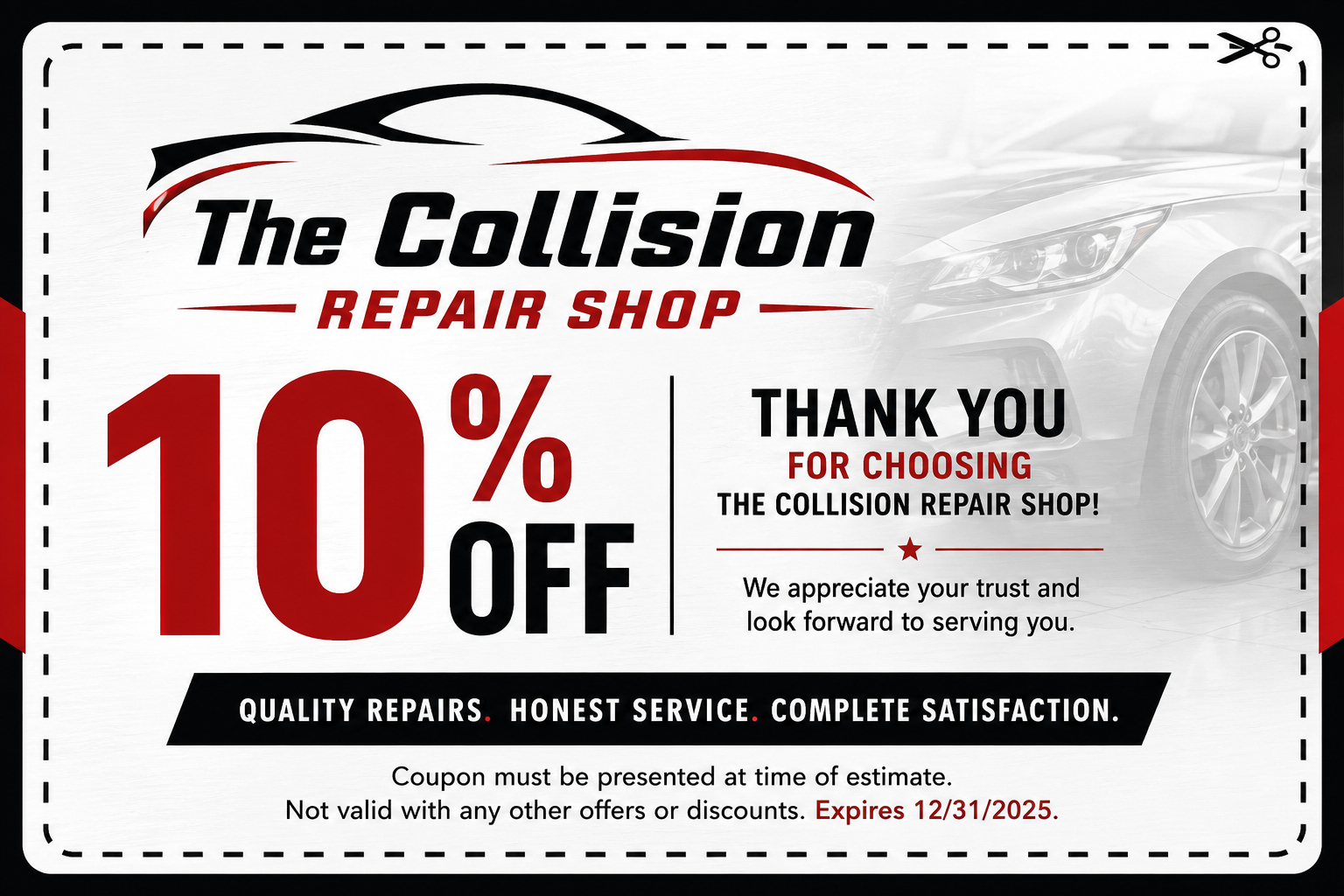
Save 10% on Eligible Customer-Pay Collision Repairs
Paying for an eligible collision repair yourself? Present the Warren 10% coupon while the estimate is being written and ask our team about the available customer-pay discount.
This offer is intended for qualifying customer-pay repairs. The coupon cannot be added after the estimate has already been completed.
Cannot be combined with deductible assistance or other promotional offers. Additional restrictions may apply.
Call About the 10% CouponA Complete Repair Begins With Understanding the Damage
The more accurately the affected areas are identified before production moves forward, the easier it is to develop a complete repair plan.
Initial Damage Review
Exterior panels, lights, bumper components and the primary impact area are reviewed.
Disassembly
Selected damaged components may be removed to expose brackets, reinforcement and surrounding parts.
Structural Evaluation
Relevant structural locations can be evaluated when impact damage suggests vehicle geometry may have changed.
Diagnostic Considerations
Cameras, sensors, radar and modules may require diagnostic evaluation depending on the collision.
Repair Information
Vehicle-specific information can influence how a component is repaired, replaced or attached.
Insurance Supplement
Additional accident-related damage can be documented when it was not included in the original insurance estimate.
The First Insurance Estimate May Not Be the Complete Repair
Initial estimates are frequently written while most of the damaged vehicle remains assembled.
The estimator may see a damaged bumper, broken lamp and dented fender. What may not yet be visible is a cracked bracket, bent reinforcement, damaged sensor mount, wiring damage or another affected component behind the exterior.
When additional accident-related damage is discovered, the repair information can be updated and supplemental documentation may be submitted to the insurance carrier.
Deductible Assistance
An insurance deductible can become another unexpected cost after a Warren collision. Ask whether deductible assistance is available for your qualifying repair.
Already Have an Insurance Estimate?
Bring it with you. We can review the estimate and discuss what happens as your vehicle moves into the repair process.
- Ask about available deductible assistance.
- Review the insurance estimate.
- Discuss hidden damage and supplements.
- Ask about transportation options.
- Understand the repair before authorizing work.
Assistance is subject to eligibility, repair circumstances and applicable requirements.
Should the Damaged Part Be Repaired or Replaced?
The size of the dent alone does not answer that question.
Damage location, material, body lines, mounting areas, manufacturer repair information and the condition of surrounding components all matter.
A relatively small dent near an edge or mounting point can present a different repair challenge than a larger dent in the center of an open panel.
The objective is not simply to make the damage less visible. The repair decision should support proper fit and a professional finished result.
Factors That Influence Repairability
Why Different Types of Parts May Appear on Your Warren Estimate
Insurance collision estimates can list several categories of parts. Understanding those terms makes the estimate easier to read.
Original Manufacturer Parts
Replacement components supplied through or produced for the original vehicle manufacturer's parts network.
Alternative New Parts
New replacement components produced outside the original manufacturer's parts network.
Used Original Components
Original components sourced from another vehicle when appropriate for the repair.
Restored Components
Certain parts may be professionally reconditioned depending on the component and repair circumstances.
One Impact Can Affect More Than One Part of the Vehicle
The location where another vehicle made contact is not necessarily the only area that requires inspection.
Cover & Reinforcement
Absorbers, reinforcement, brackets, sensors and mounting points may sit behind the visible bumper cover.
Fender & Suspension
Corner impacts can involve lamps, wheel components, suspension and surrounding support areas.
Doors & Structure
Doors, rockers, pillars, interior components and window systems can all be involved.
Rear Body & Sensors
Bumper systems, trunk floors, quarter panels and electronic components may be damaged.
Steering & Alignment
Wheel strikes can affect suspension, steering, wheels, tires and alignment.
Hinges & Latches
Hood damage can involve hinges, latches, mounting points and adjacent fenders.
Glass & Cameras
Windshield damage can involve trim, rain sensors and camera systems.
Mechanical Components
Curb strikes, debris and larger impacts can damage shields, exhaust or suspension components.
Problems Can Appear After You Leave the Accident Scene
A vehicle that still moves is not automatically free of collision-related problems.
Vehicle Pulling
Changes in tracking can indicate wheel, suspension, steering or alignment concerns.
Warning Lights
Airbag, ABS, parking-assist or other warnings may appear after a sensor or system is affected.
New Wind Noise
Changed door, panel or glass alignment may create noises that were not present before the collision.
Fluid Leaks
Cooling or mechanical systems can be damaged in front-end and underbody impacts.
Tire Rubbing
Damaged liners, body panels or suspension can contact the tire after an impact.
Door or Trunk Changes
Components that suddenly close differently can indicate that surrounding areas shifted during the collision.
Why Structural Measurement Can Matter After a Significant Collision
Vehicle bodies are built around specific dimensions and reference points.
A vehicle can appear reasonably straight while selected structural points have moved from their intended locations.
Measurement can help evaluate relevant structural areas when the collision indicates it may be necessary.
Vehicle Geometry Can Influence
Door fit and gaps
Hood alignment
Trunk or liftgate fit
Adjacent panel relationships
Suspension relationships
Overall repair quality
Corrosion Protection Matters in Warren's Road-Salt Climate
Collision repair can disturb primers, seam sealers, cavity coatings and other materials originally used to help protect the vehicle.
Repairs that expose bare metal or disturb factory seams may require appropriate corrosion-protection materials to be restored.
That consideration is particularly important in Michigan, where moisture and winter road salt can accelerate corrosion on exposed metal.
Areas That May Need Protection
Collision Repair Is Not Simply Cutting and Welding Metal
Modern vehicles can use several joining methods depending on the component, material and manufacturer.
Welded Attachments
Certain panels and structures use specified welding locations, patterns and methods.
Structural Adhesives
Some components use approved adhesives together with other attachment methods.
Bolts & Specialized Hardware
Some fasteners have specific torque or replacement requirements.
Matching Paint Takes More Than Looking Up the Paint Code
Factory color information provides a starting point, but actual vehicle color can vary.
Production variation, age, sun exposure, previous refinishing and metallic or pearl orientation can all affect how a finish appears.
Professional refinishing combines preparation, color evaluation, paint application and final finishing.
Windshield Damage Can Involve Cameras, Sensors and Trim
Modern auto glass can be tied directly into driver-assistance technology.
Cameras, rain sensors, mirrors and other equipment may be mounted to or near the windshield.
Depending on the vehicle, replacing collision-damaged glass can therefore involve more than installing a new piece of glass.
Some Dents May Not Require Conventional Body and Paint Work
Paintless dent repair can be appropriate for certain dents when the finish remains intact and the panel can be restored without conventional refinishing.
Shallow Dents
Some shallow dents with intact paint may be appropriate for PDR.
Body Lines & Edges
Damage near sharp lines, edges or reinforcement can be more difficult to restore.
Cracked Paint
Damaged paint may require conventional body repair and refinishing instead.
Cameras, Radar and Sensors May Be Sitting Behind the Damaged Panel
Modern vehicle technology has changed the way collision repairs are evaluated.
Parking Sensors
Sensors may be mounted directly in front and rear bumper covers.
Blind-Spot Radar
Rear-quarter and bumper repairs may involve radar systems.
Cameras
Windshield, grille and mirror cameras can support driver-assistance functions.
Headlamp Electronics
Modern lamps can contain modules, motors and specialized electronics.
Diagnostic Modules
Vehicle modules may store faults following a collision.
ADAS Calibration
Certain repairs can require calibration or verification of driver-assistance systems.
Electric Vehicles Can Add Different Repair Considerations
Electric and hybrid vehicles can contain high-voltage systems, specialized construction and vehicle-specific procedures.
High-Voltage Awareness
Collision damage near high-voltage components requires the repair process to consider the vehicle's electrical system and applicable procedures.
Different Materials & Construction
EVs may use specialized structures or extensive aluminum. Repair decisions depend on the individual vehicle.
Warren Collision Repairs Have to Survive Michigan Weather
Road salt, snow, ice, potholes and temperature changes add another reason for proper repair materials and procedures.
Corrosion Exposure
Exposed metal is especially vulnerable during Michigan winters.
Suspension Concerns
Wheel, tire and suspension issues may become more noticeable after impact damage.
Curb Strikes
Sliding impacts can damage wheels and suspension without dramatic body damage.
Material Changes
Large temperature swings are another reason repair preparation and material selection matter.
Why Similar-Looking Repairs Can Take Different Amounts of Time
Repair time is affected by far more than the amount of visible exterior damage.
Parts Availability
Backordered or difficult-to-source parts can affect repair timing.
Hidden Damage
Additional parts may be needed after disassembly.
Insurance Review
Supplemental damage can require carrier review.
Structural Work
Larger collisions can require additional measurement and repair.
Refinishing
Preparation, color, curing and finishing all require time.
Diagnostics & Calibration
Modern vehicle systems can add post-repair procedures.
Photos and Documentation Help Explain What Changed During the Repair
Collision claims often evolve as additional areas become visible.
Initial photographs can document exterior damage. Teardown photos can show previously hidden damage. Supplements can document additional repair operations or parts.
Diagnostic or calibration documentation can also become relevant depending on the vehicle.
Documentation May Include
Not Every Accident Repair Has to Go Through Insurance
Some Warren customers decide to handle a repair directly rather than file an insurance claim.
Get an Estimate
Begin by understanding visible damage and likely repair requirements.
Discuss Repair Options
Repair and replacement choices depend on the component and damage.
Ask About Current Offers
Eligible customer-pay repairs may qualify for the Warren 10% coupon when all terms are met.
A Damaged Vehicle Creates a Transportation Problem Too
We can help Warren customers think through getting the damaged vehicle moved and staying mobile during repairs.
Towing Assistance
If the vehicle should not be driven, contact us about towing assistance.
Insurance Rental Coverage
Rental coverage depends on the policy, claim and applicable limits.
Loaner Vehicles
Loaners may be available subject to eligibility, availability and restrictions.
When the Vehicle Is Part of Your Business, Downtime Matters
Warren has a large concentration of businesses, industrial facilities and work vehicles. Collision damage can become a business interruption as well as a repair.
Pickup Collision Damage
Bedsides, tailgates, bumpers, suspension and front structures may all be involved.
Fleet Accident Repairs
Company cars and light-duty vehicles can be evaluated after collision damage.
Repair Planning Matters
Parts, insurance approval and repair requirements influence how long the vehicle remains out of service.
Different Warren Roads Create Different Collision Scenarios
Warren combines major commuter roads, industrial traffic, residential neighborhoods and busy commercial corridors.
Rear-end collisions can happen in stop-and-go traffic. Angled impacts can happen at intersections. Parking-lot accidents can damage bumpers, doors and sensors. Winter curb strikes can damage suspension without dramatic body damage.
We evaluate the individual vehicle and accident instead of assuming every collision creates the same repair.
Serving Warren Drivers Near
If you live or work in Warren and your vehicle was damaged anywhere in Metro Detroit, contact our collision team.
Call (248) 545-4600Questions Warren Drivers Should Ask Before Authorizing Repairs
Understanding the repair process can make the entire experience less confusing.
Ask what happens if additional collision damage appears after disassembly.
Ask for an explanation of OEM, aftermarket or recycled parts listed on the repair.
Modern vehicles may require diagnostic consideration after a collision.
Certain repairs may involve calibration or verification.
Ask how parts delays, insurance supplements and repair changes are communicated.
Ask which paint or workmanship warranty terms apply to your specific repair.
More Answers for Warren Drivers After an Accident
Explore our Warren-specific guides covering what to do after a crash, insurance claims, drivability, hidden damage, choosing a repair facility and understanding collision parts.
Warren Collision Repair for Domestic, Import, Luxury and Electric Vehicles
Repair requirements vary from one manufacturer and vehicle to another.
Common Questions Warren Drivers Have After a Collision
Insurance claims and collision repairs can be unfamiliar. These answers cover some of the questions customers ask most often.
Does The Collision Repair Shop serve Warren Michigan?
Do you provide free collision estimates?
Do you offer deductible assistance?
Can I use the 10% Warren coupon with deductible assistance?
When must I present the 10% coupon?
Can I bring an insurance estimate another company already wrote?
Why can the estimate increase after disassembly?
What is a collision repair supplement?
Can I choose which collision shop repairs my vehicle?
Do you work with major insurance companies?
Can you help arrange towing?
Are loaner vehicles available?
How do I know whether my vehicle should still be driven?
Can a small accident cause hidden damage?
Why does my bumper look normal after being hit?
What is the difference between OEM and aftermarket parts?
What does recycled or used OEM mean?
Do you perform structural collision repair?
Can you match my existing paint?
Do you offer a lifetime paint warranty?
Can paintless dent repair be used on collision damage?
Can collision repair affect corrosion protection?
Does windshield replacement require camera calibration?
Do modern vehicles need diagnostic scans after an accident?
Can radar or camera systems require calibration?
Do you repair electric and hybrid vehicles?
How long does collision repair take?
Why are collision parts sometimes delayed?
Can I pay for my repair without using insurance?
Can I send photographs before coming in?
What should I bring for my Warren collision estimate?
How do I start my Warren collision repair?
Your Vehicle Is Damaged. You Don't Have to Figure Out the Entire Repair Process Yourself.
Whether you have an insurance estimate, need towing, are paying for the repair yourself or simply want someone to look at the damage, contact The Collision Repair Shop and let us help determine the next step.
Call (248) 545-4600 Start Your Warren Collision Estimate
Accident Damage and Pre-Existing Damage Are Not Always the Same Thing
A vehicle may already have scratches, dents, corrosion or mechanical issues before a collision occurs.
During an insurance repair, one important part of evaluating the vehicle is identifying which damage appears related to the reported accident and which conditions were already present.
This can matter when the damaged area already had a scratch, previous body repair, rust or another unrelated condition.
Clear photographs and documentation from immediately after an accident can help establish the vehicle's condition and the areas affected by the loss.
Examples of Conditions That May Need to Be Separated
A Collision Can Damage Mechanical Systems Without Crushing the Entire Body
Body damage gets most of the attention after an accident, but mechanical systems can also be affected depending on where the vehicle was struck.
Vehicle Pulling After a Crash
Wheel, suspension or structural impacts may affect alignment and cause the vehicle to pull or track differently.
Front-End Cooling Damage
Radiators, condensers, cooling fans, hoses and supports can be damaged in front-end collisions.
Rear & Underbody Damage
Exhaust pipes, hangers, mufflers and related components can be bent or displaced by rear or underbody impacts.
Wheel-Corner Impacts
A direct wheel strike can affect steering components even if the body damage around the wheel appears limited.
Curb & Side Impacts
Control arms, knuckles and other suspension components may require inspection after a wheel or curb impact.
Safety-System Considerations
Collision events can also involve restraint and electronic safety systems that may require vehicle-specific evaluation.
A Broken $10 Clip Can Matter to a $1,000 Bumper Assembly
Collision repairs are made up of much more than large body panels.
Clips, retainers, guides, brackets, bolts, seals and other smaller components help position and secure exterior parts.
Reusing a damaged mounting component can affect alignment, create looseness or prevent a replacement panel from fitting the way it should.
Some hardware can be reused when appropriate. Other components may be damaged or subject to specific replacement procedures.
Small Components Commonly Encountered During Collision Repair
Why a Repair Can Be Waiting Even When Nobody Is Working on the Car
Parts availability is one of the biggest variables in collision repair timing.
Manufacturer Delays
A required component may temporarily be unavailable through normal supply channels.
Transit Time
A part may be available but located in another warehouse or region.
Replacement Required
Occasionally a delivered component is incorrect, damaged or unsuitable and must be reordered.
Additional Parts
Disassembly can reveal damage that requires components not included in the initial order.
The Last Stage Should Be More Than Handing You the Keys
Reassembly and final quality control help confirm that the repaired area has been completed before the vehicle is returned.
Panels should be reviewed for fit. Lamps and trim should be installed. Relevant functions should be checked. The finish should be inspected.
If the repair involved diagnostic or calibration requirements, those operations should also be completed or coordinated before delivery when required.
The final inspection is the point where the repair comes together as one vehicle again rather than a collection of separate body, paint and mechanical operations.
Final Review Can Include
Taking Care of Freshly Refinished Areas After Pickup
A professionally refinished vehicle still benefits from sensible care after the repair is complete.
Ask Before Applying Products
If you plan to wax, coat or apply another product soon after refinishing, ask the shop about appropriate timing.
Inspect the Vehicle at Pickup
Review the repair with the shop and ask questions before leaving if something is unclear.
Keep Your Repair Paperwork
Save invoices, warranty information and repair documentation with your vehicle records.
What Should You Photograph After a Car Accident?
If it is safe to do so, photographs can help document what the vehicles and accident scene looked like immediately afterward.
Take several wider photographs showing the damaged vehicle from multiple angles.
Photograph broken, dented or displaced components from closer distances.
Document visible damage and the position of the other vehicle when appropriate and safe.
Wider scene photographs may help preserve context about the collision location.
Things Warren Drivers Commonly Assume After an Accident
Plastic bumper covers can flex while reinforcement, absorbers, brackets or sensors behind them remain damaged.
A vehicle can remain driveable while having suspension, structural, electronic or cooling-system damage.
Hidden accident damage can change the repair after disassembly.
Age, production variations and previous refinishing can affect the actual appearance of a vehicle's color.
Collision estimates may use different part categories and each repair must be evaluated based on the actual vehicle.
Modern repairs can involve mechanical components, electronics, cameras, radar, glass and structural areas too.
More Information Specifically for Warren Drivers
Continue reading about the questions that come up most often after an accident.
Additional Questions Customers Ask Before and After Repairs
Why is my steering wheel crooked after an accident?
Can a front-end accident cause my car to overheat?
Can a rear-end collision damage the exhaust?
Why does my door suddenly make wind noise after a crash?
Why do collision shops replace clips and brackets?
Why is my repair waiting on parts?
Can an old dent affect an insurance collision repair?
Why should I keep my collision repair paperwork?
Should I inspect the car before leaving the collision shop?
Why does a damaged headlamp sometimes cost more than expected?
Can a wheel impact damage the suspension without bending the fender?
Can collision damage cause dashboard warning lights later?
Still Have Questions About Your Warren Collision Damage?
You do not need to diagnose the vehicle yourself. Contact The Collision Repair Shop with your photos, insurance estimate or questions and let our team help you determine the next step.
Call (248) 545-4600 Request a Warren Collision Estimate