Detroit Quarter Panel Repair
Professional quarter panel repair and replacement for vehicles damaged in side impacts, rear collisions, parking accidents, and other types of body damage.
The Collision Repair Shop repairs steel and aluminum quarter panels using advanced measuring equipment, manufacturer repair information, premium Glasurit refinishing products, and vehicle-specific repair methods whenever applicable.
Professional Quarter Panel Repair in Detroit
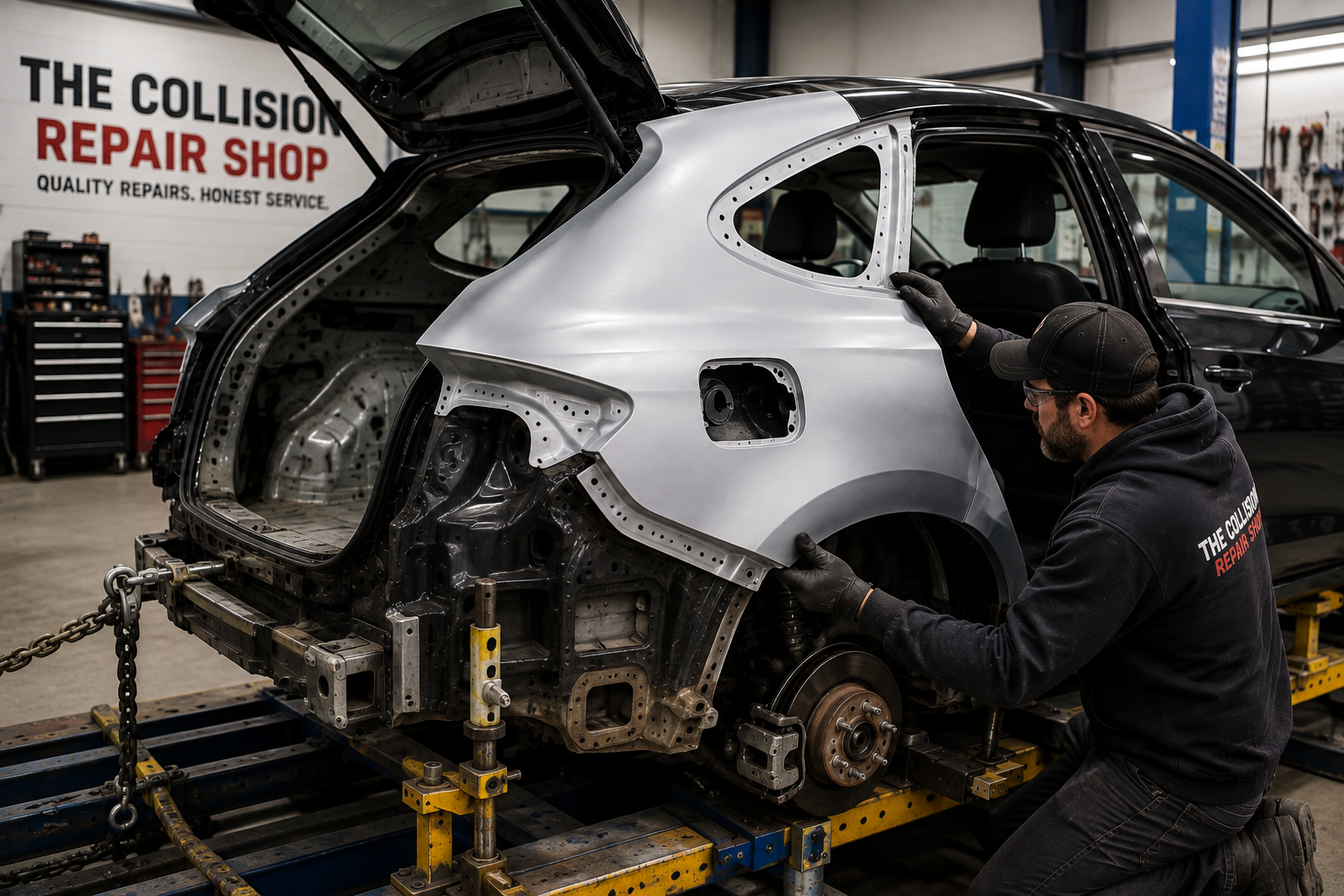
A quarter panel forms a large portion of the rear side of a vehicle. It usually surrounds the rear wheel opening and connects with nearby areas such as the roof rail, rocker panel, trunk opening, rear body panel, tail lamp pocket, and door opening.
Because the quarter panel is often welded or permanently attached to the vehicle, repairing it can be more involved than replacing a removable panel such as a front fender. Damage may also extend behind the visible outer panel into reinforcements, inner wheelhouses, brackets, sensors, or structural mounting areas.
Our Detroit quarter panel repair process begins with a detailed inspection of the visible damage and adjoining components. When disassembly is authorized, hidden areas can be evaluated before the final repair plan is completed.
What Is a Vehicle Quarter Panel?
The quarter panel is the exterior body section located behind the rear door on most passenger vehicles. On two-door vehicles, it may extend from the rear of the front door to the trunk or liftgate opening.
Outer Quarter Panel
The visible painted panel forming the exterior side of the rear body and wheel opening.
Inner Quarter Structure
Reinforcements and inner panels located behind the exterior sheet metal.
Wheelhouse
The structure surrounding the rear wheel and connecting to the quarter panel and floor.
Quarter Glass Area
The opening and surrounding structure for fixed rear side glass on applicable vehicles.
Fuel Door Area
The recessed opening and mounting area around the fuel or charging door.
Tail Lamp Pocket
The body opening and mounting points that support the rear lamp assembly.
Detroit Quarter Panel Repair Services
Quarter Panel Dent Repair
Repair of dents, creases, distorted body lines, and damaged wheel-opening areas when the panel remains safely repairable.
Quarter Panel Replacement
Removal and installation of a damaged quarter panel when repair is not practical or manufacturer procedures require replacement.
Quarter Panel Sectioning
Partial replacement at manufacturer-approved locations when sectioning is permitted for the specific vehicle.
Wheel-Opening Repair
Repair of damaged wheel lips, flanges, edges, moldings, liners, and adjoining inner structures.
Inner Wheelhouse Repair
Inspection, repair, or replacement of damaged inner wheelhouse components located behind the outer quarter panel.
Tail Lamp Pocket Repair
Restoration of damaged lamp mounting areas, openings, brackets, seams, and surrounding body structure.
Fuel Door Area Repair
Repair of damaged fuel-door pockets, hinges, mounting areas, trim, filler-neck surroundings, and related components.
Quarter Glass Removal and Installation
Coordination of fixed quarter-glass removal and installation when necessary to access or replace the damaged panel.
Paint and Refinishing
Surface preparation, computerized color matching, Glasurit refinishing, clear coat, blending, curing, and polishing.
Corrosion Protection
Restoration of primers, seam sealers, cavity waxes, protective coatings, and corrosion-resistant materials.
Structural Measuring
Measurement of important body reference points when the collision may have moved the rear body structure.
Sensor and ADAS Coordination
Inspection and calibration coordination when blind-spot radar, parking sensors, cameras, or related systems are affected.
Should a Quarter Panel Be Repaired or Replaced?
The decision depends on the material, damage severity, panel location, accessibility, structural involvement, prior repairs, and manufacturer limitations.
Repair May Be Appropriate When
- The metal is not excessively stretched
- The panel is not torn or severely cracked
- Structural attachment points remain intact
- The wheel opening can be restored properly
- Manufacturer procedures permit repair
- The panel can be restored without excessive filler
Replacement May Be Required When
- The panel has major tears or severe deformation
- Damage reaches restricted structural areas
- Previous repairs reduce safe repairability
- Mounting flanges or seams are heavily damaged
- Corrosion has weakened the panel
- The manufacturer requires replacement
Quarter Panel Sectioning Procedures
Sectioning means replacing only part of a quarter panel rather than removing the complete factory panel. This repair method is only appropriate when the vehicle manufacturer permits it and identifies acceptable cut locations.
The sectioning location must avoid restricted structural areas, reinforcements, body lines, complex shapes, and components that cannot be safely joined.
Repair information may also specify the required joint type, weld spacing, backing method, adhesive use, corrosion protection, and refinishing procedure.
Hidden Damage Behind a Quarter Panel
The outer quarter panel can hide extensive damage caused by a side or rear impact. Additional repairs may not become visible until trim, lamps, liners, interior panels, glass, or damaged sheet metal are removed.
Quarter Panel Construction Materials
Traditional Steel
Steel quarter panels may be repairable through controlled metal shaping, pulling, welding, sectioning, or replacement, depending on the damage.
High-Strength Steel
Certain high-strength materials have strict heat, repair, and replacement limitations that must be verified before work begins.
Aluminum
Aluminum quarter panels require dedicated tools, careful contamination control, specialized joining methods, and material-specific repair procedures.
Mixed-Material Construction
Some vehicles combine steel, aluminum, adhesives, rivets, castings, and composite components within the rear body.
Welding, Riveting and Structural Adhesives
Quarter panels may be attached with several joining methods. The correct method depends on the vehicle construction and the manufacturer’s repair information.
Resistance Spot Welding
Used in factory-style flange areas when access, equipment, material, and procedures allow.
MIG or MAG Welding
May be required for selected seams, plug welds, joints, or sectioning locations.
Silicon Bronze Welding
Used in specific applications when identified by the vehicle manufacturer.
Riveting
Some aluminum and mixed-material vehicles require approved rivets installed with specialized equipment.
Structural Adhesive
Adhesives may be used with welds or rivets and require proper preparation, bead size, clamping, and curing.
Seam Sealing
Factory-style seam sealer helps protect joints from moisture, debris, corrosion, and water intrusion.
Quarter Panel Painting and Color Matching
Quarter panels are large, highly visible exterior surfaces. Their shape, body lines, wheel opening, and connection with surrounding panels can make color matching and finish uniformity especially important.
Our refinishing process may include computerized paint formulas, color-variant selection, test panels, surface preparation, primer, sealer, basecoat, clear coat, blending, curing, and final polishing.
Premium Glasurit refinishing products help support color accuracy, appearance, durability, and a professional finish.
Quarter Panel Corrosion Protection
Replacing or repairing a welded quarter panel can disturb factory coatings and expose areas that require renewed protection.
Blind-Spot Sensors and Quarter Panel Repairs
Many modern vehicles position blind-spot radar units, parking sensors, wiring, modules, antennas, or cameras near the rear bumper and quarter panel areas.
An impact can damage a sensor, bracket, wiring connection, mounting location, bumper cover, or the body structure that establishes the sensor’s viewing angle.
After applicable repairs, the vehicle may require diagnostic scanning, sensor inspection, aiming, initialization, or calibration. We coordinate required calibrations with a qualified provider.
Our Detroit Quarter Panel Repair Process
Initial Damage Inspection
We inspect the quarter panel, wheel opening, adjacent panels, glass, lamps, trim, and visible structural areas.
Vehicle Identification
The year, make, model, VIN, construction materials, and vehicle options are reviewed.
OEM Procedure Research
Manufacturer information is reviewed for repairability, sectioning, joining, refinishing, and calibration needs.
Authorized Disassembly
Lamps, trim, liners, interior panels, bumpers, glass, or damaged components may be removed to inspect hidden areas.
Structural Measurement
Rear body and adjoining reference points are measured when collision movement is suspected.
Repair or Replacement
The quarter panel and related components are restored using the approved repair plan.
Joining and Corrosion Protection
Welds, rivets, adhesives, primers, sealers, coatings, and cavity protection are applied as required.
Paint and Refinishing
The repaired area is prepared, color matched, painted, cleared, cured, and polished.
Reassembly
Lamps, glass, trim, liners, sensors, moldings, and interior components are reinstalled.
Scanning and Calibration
Applicable scans, system checks, sensor calibrations, and road tests are completed or coordinated.
Final Quality Inspection
Panel fit, gaps, paint finish, glass, lighting, sensors, trim, and vehicle operation are reviewed.
Quarter Panel Repair After an Insurance Claim
Quarter panel claims often involve more than one damaged exterior panel. The estimate may also include bumper work, lamps, glass, suspension, sensors, interior trim, structural repairs, corrosion protection, refinishing, and calibration.
The first insurance estimate may be based only on visible damage. Additional operations can become necessary after authorized disassembly reveals hidden damage or manufacturer-required procedures.
Our team documents applicable damage and communicates with the insurance carrier regarding supplements, repair procedures, parts, refinishing, and required electronic operations.
Quarter Panel Repair for Many Vehicle Manufacturers
Why Choose The Collision Repair Shop?
Detroit Quarter Panel Repair Questions
What is a quarter panel?
A quarter panel is the exterior rear side body panel surrounding the rear wheel opening and connecting with nearby roof, rocker, trunk, lamp, or door-opening areas.
Is a quarter panel the same as a fender?
Not usually. A front fender is commonly bolted onto the vehicle, while a rear quarter panel is often welded or permanently attached to the body.
Can a dented quarter panel be repaired?
Many dents can be repaired, but repairability depends on metal stretch, tears, body lines, wheel-opening damage, material, access, and manufacturer limits.
When does a quarter panel need replacement?
Replacement may be required when damage is severe, the metal is torn or excessively stretched, important seams are distorted, corrosion is present, or OEM procedures prohibit repair.
What is quarter panel sectioning?
Sectioning replaces only a manufacturer-approved portion of the panel rather than removing the complete quarter panel.
Can every quarter panel be sectioned?
No. Sectioning is only appropriate when permitted by the vehicle manufacturer and performed at approved locations.
Does quarter panel replacement affect the structure?
It can. The quarter panel connects to several body areas and may contribute to rear body stiffness, panel alignment, water sealing, and collision-energy management.
Will the rear glass need to be removed?
Quarter glass, back glass, or surrounding trim may require removal depending on panel design, repair access, welding, refinishing, and manufacturer procedures.
Will the paint match the rest of the vehicle?
We use computerized formulas, color variants, test panels, technician evaluation, and blending when appropriate to achieve the closest practical match.
Why might the rear door need paint blending?
Some colors cannot be matched perfectly at a direct panel edge. Blending into the adjacent door may create a smoother visual transition.
Can quarter panel damage affect blind-spot monitoring?
Yes. Radar sensors, brackets, wiring, bumper components, or mounting structures may be located near the damaged area.
Does the vehicle need scanning after repair?
Many modern vehicles may require diagnostic scanning after collision repairs, depending on the systems affected and manufacturer requirements.
Can quarter panel damage affect the suspension?
A side impact near the rear wheel can damage wheels, tires, hubs, suspension arms, alignment, mounting points, or nearby body structure.
How is corrosion prevented after replacement?
Applicable primers, seam sealers, cavity waxes, coatings, adhesives, and material-isolation products are restored during the repair.
Can an aluminum quarter panel be repaired?
Some aluminum panels can be repaired, while others require replacement. The decision depends on damage and manufacturer-specific procedures.
How long does quarter panel repair take?
Timing depends on damage severity, repair method, parts, insurance approval, glass removal, structural work, refinishing, scans, and calibration requirements.
Will insurance cover quarter panel repair?
Coverage depends on the claim, policy, damage, selected repair plan, and insurance carrier determination.
What is an insurance supplement?
A supplement documents additional damage or required operations discovered after the initial estimate or authorized disassembly.
Do you provide a warranty?
Applicable written warranty coverage is provided, including a lifetime paint warranty subject to stated terms and conditions.
How do I request an estimate?
Call The Collision Repair Shop at (248) 545-4600 or use our online contact form to request a free written estimate.
Need Professional Quarter Panel Repair in Detroit?
Contact The Collision Repair Shop for quarter panel repair, replacement, structural measuring, insurance assistance, premium refinishing, corrosion protection, and calibration coordination.