Insurance Collision Repair Southfield MI
We help Southfield drivers navigate the entire insurance collision repair process — from the first estimate and claim paperwork through hidden damage, supplements, parts, rental transportation and final delivery.
An accident is stressful enough. You should not have to become an insurance expert just to get your vehicle repaired. The Collision Repair Shop works with insurance companies while helping you understand what is happening with your vehicle, what your estimate means and what happens when the actual repair requires more than the original estimate included.
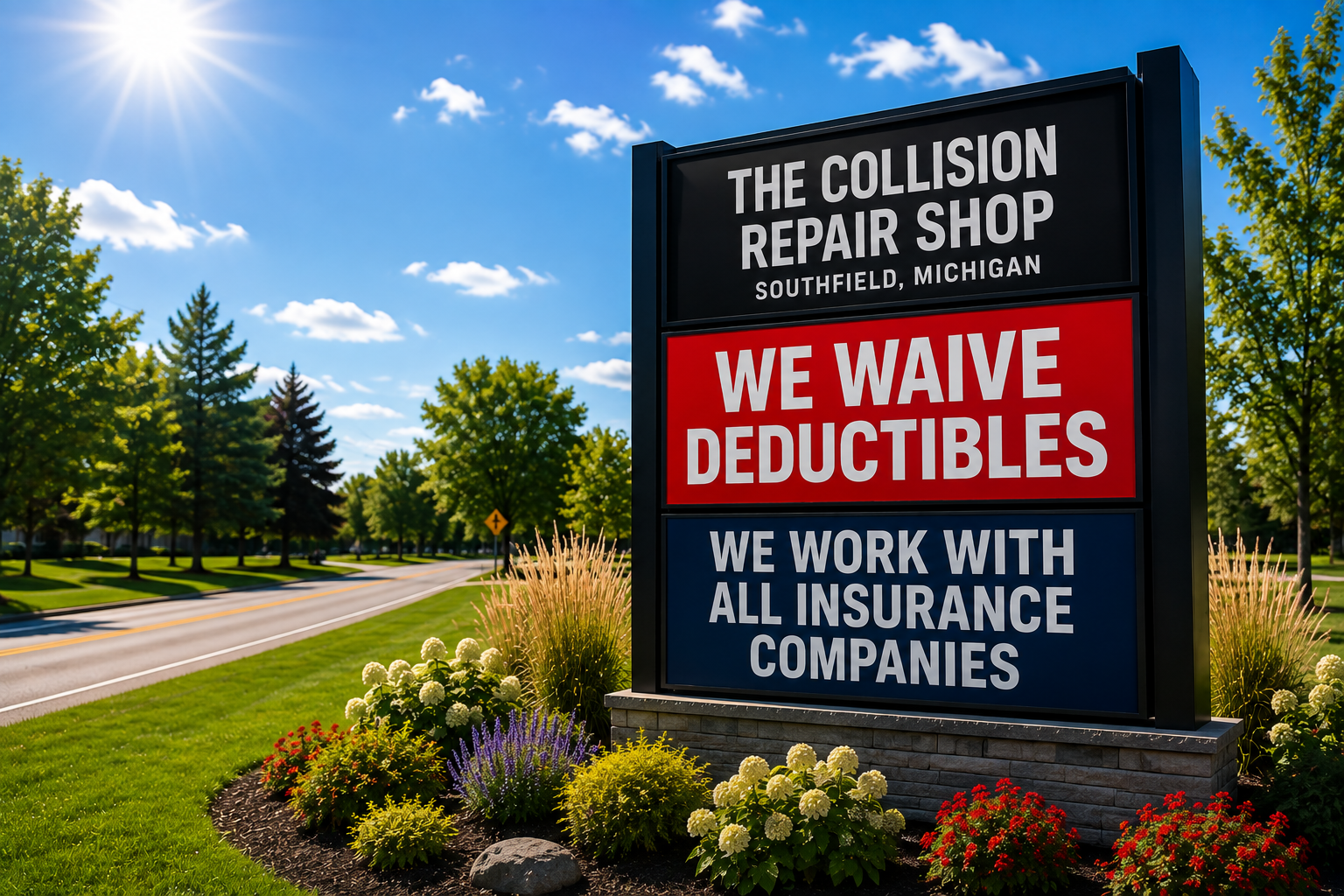
We Waive Deductibles on Qualifying Collision Repairs
Your collision deductible can create an additional out-of-pocket expense at a time when you are already dealing with an accident.
The Collision Repair Shop offers deductible assistance on qualifying collision repairs. Depending on the repair and applicable eligibility requirements, deductible assistance may be available.
Tell our team about your deductible when you contact us so we can explain the applicable offer and determine whether your repair qualifies.
Rental Car & Loaner Vehicle Help
Collision repairs can take time. Customers still need transportation for work, family responsibilities and daily life.
If your insurance policy or claim includes rental reimbursement, our team can help you understand the process and coordinate applicable transportation while your vehicle is being repaired.
Loaner vehicle options may also be available subject to restrictions, eligibility and availability.
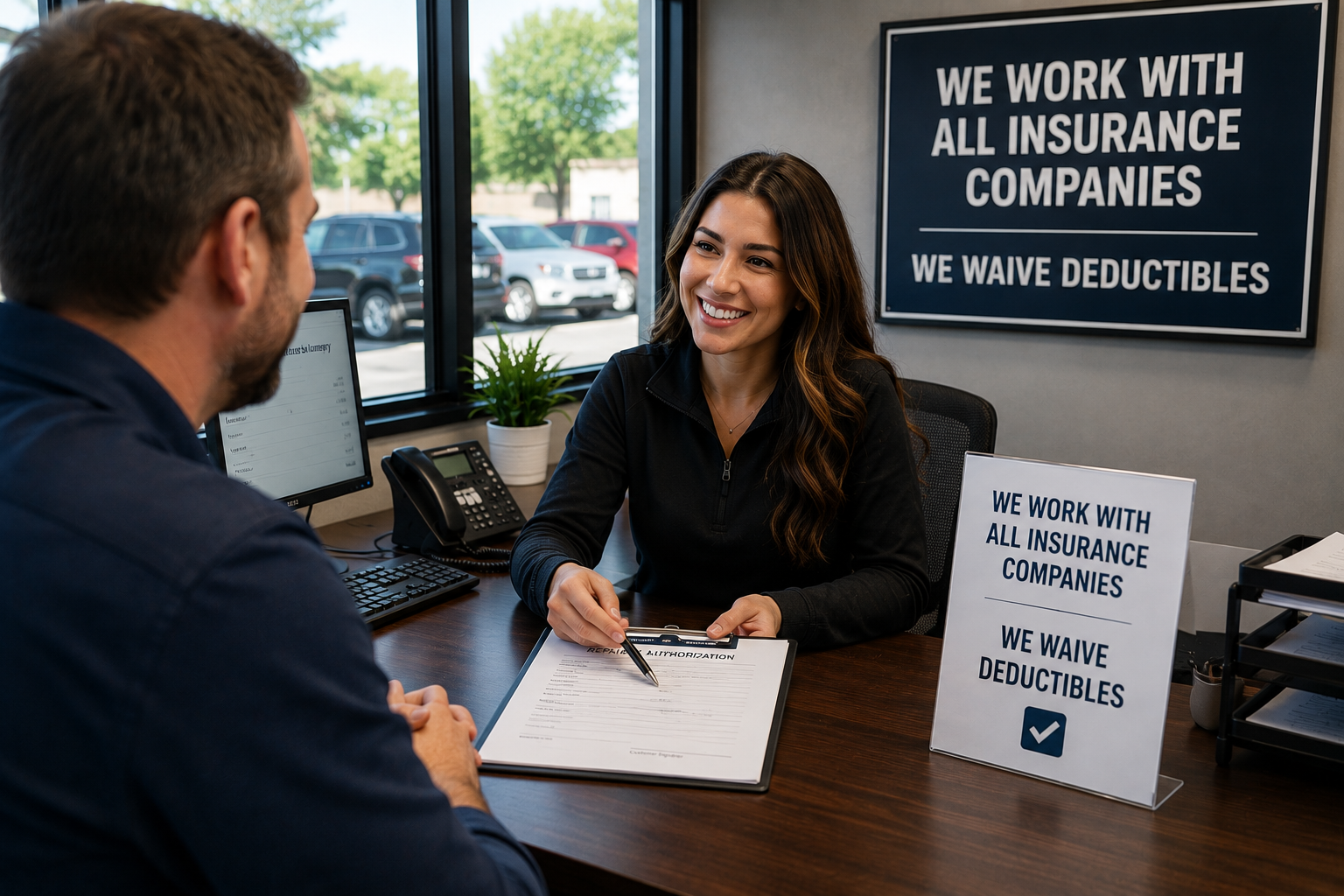
You Should Not Have to Become an Insurance Expert After an Accident
Most customers do not handle collision claims every day. Insurance companies and collision shops do.
Terms such as estimate, supplement, deductible, rental reimbursement, aftermarket parts, recycled parts, repair authorization and total loss can suddenly become part of the conversation.
Our job is to help make the collision repair side understandable while communicating applicable repair information with the insurance company.
We want customers to know what is happening with their vehicle instead of feeling stuck between the collision shop and the insurance company.
How The Collision Repair Shop Helps During an Insurance Claim
The insurance company handles coverage and payment decisions under the policy. The collision repair shop handles the vehicle repair. Communication between the customer, insurer and repair facility helps move the claim forward.
Insurance Estimate Review
We compare the insurance estimate with the actual vehicle and collision damage identified during repair planning.
Claim Communication
Our team communicates applicable repair information and documentation with insurance representatives during the claim.
Hidden Damage
Damage behind bumpers, lamps, body panels and trim can become visible after necessary disassembly.
Insurance Supplements
Additional legitimate damage or repair operations can be documented and submitted to the insurer for review.
Parts Research
We research replacement parts and address legitimate fit, condition, availability and vehicle-application concerns.
Rental Assistance
We can help customers navigate applicable rental reimbursement and transportation arrangements.
Deductible Assistance
Deductible assistance may be available on qualifying collision repairs subject to applicable restrictions.
Diagnostic Procedures
Modern collision claims can include diagnostic scanning and electronic-system procedures depending on the vehicle.
ADAS Procedures
Cameras, radar and driver-assistance systems may require applicable procedures after certain collision repairs.
How Does an Auto Insurance Collision Claim Actually Work?
Most customers do not deal with collision claims every day. Understanding the basic process can make everything after an accident much less confusing.
The Accident Happens
After making sure everyone is safe, the insurance and repair process begins. Depending on the vehicle's condition, it may still be drivable or may need towing.
The Insurance Claim Is Reported
The accident is reported to the appropriate insurance company. The insurer generally creates a claim number and assigns a representative or adjuster.
Coverage Is Reviewed
The insurance company reviews the policy, claim and circumstances of the loss to determine which coverages may apply and what deductible or other policy provisions are involved.
The Vehicle Is Inspected
Damage may be reviewed in person, from photographs, electronically or at the repair facility. This stage often produces the initial insurance estimate.
The Initial Estimate Is Written
The insurance estimate identifies damage and repair operations that can reasonably be determined using the information available at that point.
The Collision Shop Reviews the Vehicle
The Collision Repair Shop evaluates the actual vehicle and compares its physical damage and repair needs with the insurance estimate.
The Customer Authorizes Repairs
The vehicle owner remains the customer in the repair transaction and authorizes the collision repair facility to proceed.
Disassembly Reveals Hidden Damage
Once damaged bumpers, lamps, trim or panels are removed, structural, mechanical or electronic damage that could not be seen initially may become visible.
A Supplement May Be Written
Legitimate additional damage and required repair operations can be documented and submitted to the insurance company for review.
Parts Are Researched & Ordered
Replacement parts are researched according to the vehicle, repair plan, availability and applicable insurance estimate or authorization.
Collision Repairs Are Completed
Body, structural, mechanical, refinishing and applicable electronic procedures are completed according to the repair plan.
Final Inspection & Delivery
After repairs, reassembly and applicable post-repair procedures are completed, the vehicle receives a final quality review before delivery.
The Insurance Company Handles the Claim. The Collision Shop Handles the Repair.
The insurer, collision shop and vehicle owner all have different roles during an insurance repair.
The Insurance Company
Reviews coverage under the applicable policy and claim, investigates the loss, reviews estimates and supplements, and determines what it will authorize or pay.
The Collision Repair Shop
Inspects the vehicle, develops the repair plan, identifies additional damage, researches repair requirements, orders parts and performs authorized repairs.
The Vehicle Owner
Is the customer in the repair transaction, chooses where to have the vehicle repaired and authorizes the work performed.
Why Doesn't the First Insurance Estimate Always Include Everything?
The first estimate is based on the information available during the initial inspection.
Imagine a front bumper that has been pushed inward during an accident. From outside the vehicle, an estimator may see a damaged bumper cover, grille or headlight.
What may not yet be visible is the bumper reinforcement, absorber, brackets, radiator support, condenser, wiring, radar bracket or other components behind the bumper.
Once the vehicle is disassembled, the collision shop gets a much clearer view of the complete damaged area.
That does not automatically mean the first estimate was improper. It often means additional information became available once damaged components were removed.
What Is a Collision Repair Supplement?
A supplement is additional repair information submitted after the original estimate.
Supplements are common because many collision-damaged components cannot be completely evaluated until exterior parts are removed.
For example, the original estimate may include a bumper cover. After disassembly, the shop may find a damaged reinforcement, absorber or sensor bracket underneath.
The additional damage is documented and communicated to the insurance company. The insurer then reviews the information and determines what is covered under the claim.
Supplements can also involve labor operations, parts price differences, parts availability, diagnostic procedures, calibration or other legitimate repair requirements discovered during the process.
OEM, Aftermarket & Recycled Parts — What Does It Mean?
Replacement parts are an important part of many insurance repairs. Depending on the vehicle, policy, estimate, availability and repair plan, different categories of parts may be considered.
OEM Parts
OEM parts are supplied through the original vehicle manufacturer's parts network and are designed for the applicable vehicle.
Aftermarket Parts
Aftermarket parts are produced outside the original manufacturer's parts network. Fit, construction and quality can vary by manufacturer and component.
Recycled / Used Parts
Recycled parts are original vehicle components removed from another vehicle. Their condition and suitability should be evaluated before installation.
We Do Not Believe the Cheapest Part Should Automatically Be the Entire Repair Strategy
Price matters in an insurance repair, but fit, condition, application, availability and the quality of the finished repair matter too. When a legitimate parts issue occurs, The Collision Repair Shop can document the concern and communicate it during the insurance repair process.
What Happens if an Insurance-Specified Part Does Not Fit or Arrives Damaged?
Replacement components should be evaluated when they arrive.
A part can potentially have shipping damage, pre-existing damage, fitment problems, incorrect equipment or other issues that affect whether it should be installed.
When there is a legitimate problem with a part specified for the repair, our team can document the condition and communicate the issue through the appropriate insurance or supplier process.
The goal is not to create unnecessary expense. The goal is to avoid forcing an inappropriate or damaged component onto the vehicle simply because it appeared on the first estimate.
What Happens With Transportation While Your Vehicle Is Being Repaired?
If your applicable insurance coverage or claim includes rental reimbursement, a rental vehicle may be available while covered collision repairs are being completed.
Rental limits, daily allowances and maximum benefits can vary, so the exact coverage should be confirmed with the applicable insurance company.
The Collision Repair Shop can help customers understand the transportation process and coordinate applicable rental arrangements.
Loaner vehicles may also be available subject to eligibility, restrictions and availability.
What Does It Mean When an Insurance Company Says a Vehicle May Be a Total Loss?
Sometimes the cost and circumstances of repairing a collision-damaged vehicle cause the insurance company to evaluate whether the claim should be handled as a total loss rather than a repair.
Damage Is Evaluated
The estimated repair cost and known collision damage are considered as part of the insurer's total-loss evaluation.
Vehicle Value Is Considered
The insurer evaluates the vehicle according to its applicable claim valuation process and policy provisions.
The Claim Path Changes
If the vehicle is declared a total loss, the process shifts away from collision repair and toward settlement of the applicable insurance claim.
Collision Claims Can Include Diagnostic Scanning & ADAS Procedures
Modern vehicles can contain cameras, radar, blind-spot systems, parking sensors and many electronic control modules.
Certain collision repairs can require applicable diagnostic scanning, calibration or other vehicle-specific procedures.
If legitimate additional procedures become necessary and were not included on the original estimate, they can be documented and communicated during the insurance supplement process.
ADAS Calibration Southfield MIAn Insurance Company and a Collision Repair Shop Have Different Responsibilities
The insurance company evaluates coverage and what it will pay under the applicable policy and claim. The collision repair facility evaluates and performs the repair authorized by the vehicle owner. Our goal is to work through that process professionally while keeping the customer informed.
Learn More About Your Specific Type of Collision Repair
Insurance claims often overlap with body repair, structural repair, ADAS technology and different accident types. Explore our related Southfield repair guides.
Southfield Michigan Collision Shop
Learn about our complete collision repair services, deductible assistance, rental help, parts advocacy and repair process.
Southfield Collision ShopFront End Collision Repair Southfield MI
Learn about bumper, hood, fender, cooling, suspension, structural and hidden front-end damage.
Front-End RepairRear End Collision Repair Southfield MI
Learn about rear bumpers, trunk and liftgate damage, rear body structure, sensors and blind-spot systems.
Rear-End RepairSide Impact Collision Repair Southfield MI
Learn about doors, rocker panels, pillars, quarter panels, safety systems and side-impact structural damage.
Side-Impact RepairPaint & Auto Body Repair Southfield MI
Learn about body repair, color matching, metallic and pearl finishes, blending and professional refinishing.
Paint & Body RepairADAS Calibration After Collision Southfield MI
Learn about diagnostic scans, cameras, radar, blind-spot monitoring, parking sensors and calibration.
ADAS CalibrationWinter Collision Repair Southfield MI
Learn about insurance repairs following snow, ice, curb strikes, winter front-end accidents and suspension damage.
Winter Collision RepairCommon Questions About Auto Insurance Collision Claims
Every claim is different, but these answers explain many of the questions customers have when dealing with an accident and insurance repair.
Do you work with insurance companies?
Do I need the insurance estimate before contacting your shop?
What is an insurance deductible?
Does The Collision Repair Shop waive deductibles?
Why is the final repair estimate higher than the first insurance estimate?
What is an insurance supplement?
Does a supplement mean the insurance company made a mistake?
Can you help with rental transportation?
What if a replacement part does not fit properly?
Can insurance collision repairs involve OEM, aftermarket or used parts?
Can ADAS calibration become part of an insurance claim?
What happens if my vehicle is considered a total loss?
Where is The Collision Repair Shop serving Southfield located?
We Help You Understand the Claim While We Focus on Repairing the Vehicle
Insurance collision repair can involve estimates, adjusters, parts, supplements, deductibles, rental transportation, hidden damage and modern electronic systems. Our goal is to help Southfield customers navigate those moving pieces while providing a professional collision repair experience from the first inspection through final delivery.
Been in an Accident? You Do Not Have to Navigate the Repair Process Alone.
Contact The Collision Repair Shop serving Southfield Michigan. Bring us your insurance estimate, claim information or simply tell us what happened. We can help you understand the next steps, review the collision damage and begin moving the repair process forward.