
Rear End Collision Repair Southfield MI
Complete rear-end collision repair for Southfield Michigan drivers — including rear bumpers, trunk and liftgate damage, quarter panels, rear body structure, taillights, exhaust, parking sensors, blind-spot radar, suspension and hidden collision damage.
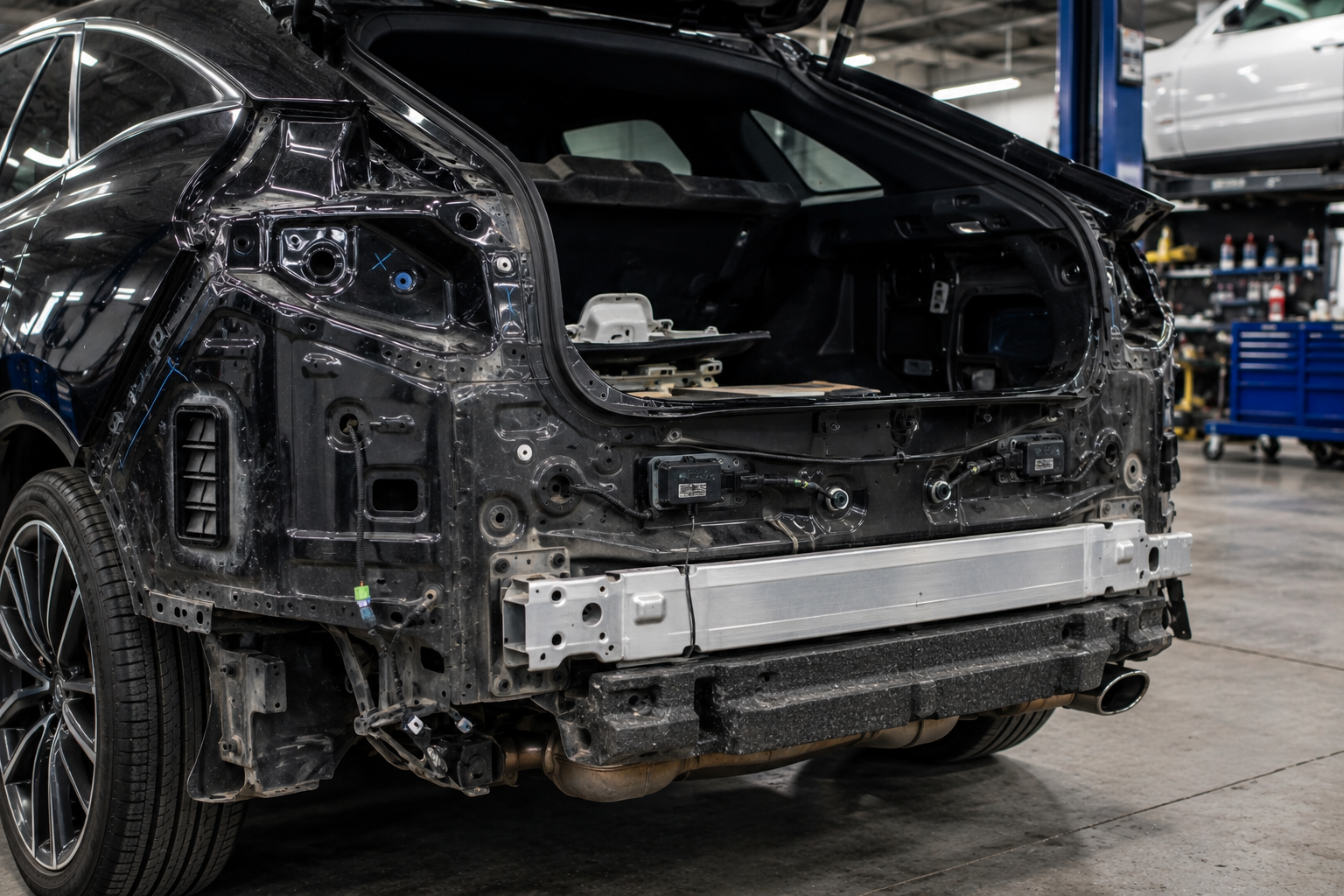
Rear-end collision damage is not always limited to the bumper you can see. Behind that bumper can be reinforcement, impact absorbers, brackets, wiring, parking sensors, radar modules and structural components. The Collision Repair Shop evaluates the complete damaged area so the repair is based on what the vehicle actually needs — not simply what is visible from the outside.
Rear-End Collision Damage Can Go Far Beyond the Bumper
A rear bumper is only the outermost part of a much larger system. Behind it can be reinforcement, impact absorbers, mounting brackets, wiring, parking sensors, blind-spot radar and rear structural components.
Rear Bumper Cover
Rear bumper covers can crack, tear, deform, scuff or separate from their mounting points after an impact.
Bumper Reinforcement
The metal reinforcement behind the bumper can bend or deform while remaining completely hidden from exterior view.
Energy Absorber
Energy-absorbing material behind the bumper may compress, crack or require replacement following a collision.
Trunk Lid
Rear impacts can bend or misalign the trunk lid, hinges, latch, striker and surrounding mounting areas.
Liftgate
SUV and crossover rear impacts can damage the liftgate, hinges, latch, trim, glass, wiring and powered systems.
Quarter Panels
Strong rear impacts can transfer force into one or both quarter panels and surrounding body areas.
Taillights
Taillights can suffer broken lenses, damaged housings, broken mounting tabs or electrical problems.
Rear Body Panel
The inner rear body panel can bend or distort even when the exterior bumper hides the damage.
Trunk Floor
More severe impacts can push damage inward toward the trunk floor and adjoining structural components.
Rear Rails
Significant collision forces can reach structural rail areas depending on the vehicle and severity of impact.
Exhaust System
Exhaust tips, mufflers, pipes, hangers and heat shields may be displaced or damaged in a rear impact.
Rear Suspension
Offset rear impacts involving a corner or wheel can affect suspension, wheel alignment and related components.
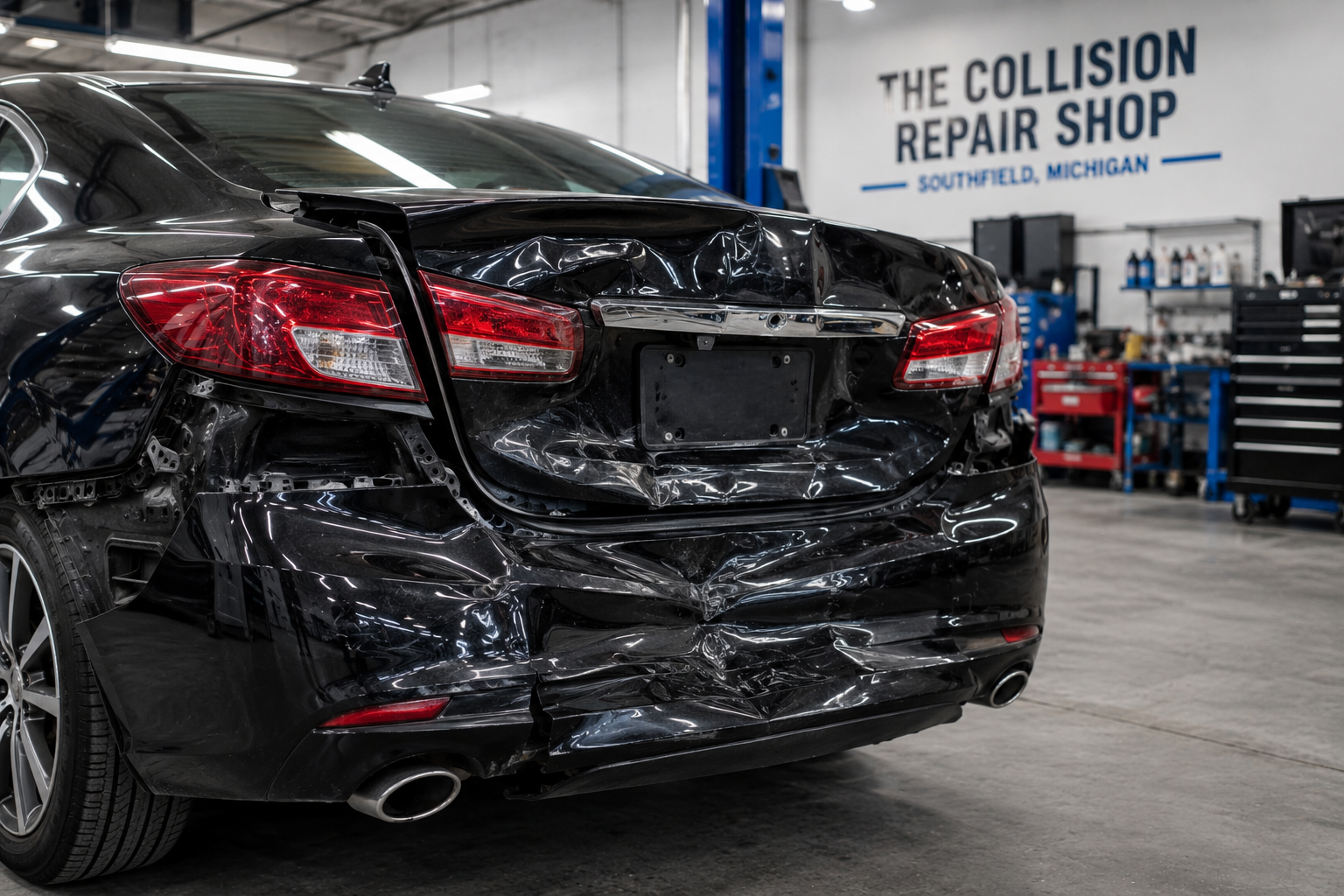
What Is Hiding Behind the Rear Bumper After a Collision?
Removing the bumper can reveal damage that was impossible to see during the original exterior inspection.
Reinforcement, impact absorbers, brackets, wiring, parking sensors, blind-spot radar and rear body structure may all be located behind the bumper cover.
This is one of the main reasons an initial insurance estimate and the final repair plan may not be identical.
The goal is to identify and repair what the accident actually damaged — not simply make the outside look good again.
A Bumper That Looks Repairable Can Still Hide Significant Damage
Rear bumper covers can flex during an impact and sometimes partially return toward their original shape. That can make the accident appear less serious than it actually was.
Underneath the bumper cover, however, the reinforcement may be bent, the absorber may be compressed, mounting brackets may be damaged and rear body structure may have moved.
Parking sensors and blind-spot radar can also remain hidden behind the bumper while their mounting brackets or surrounding structure have been affected.
Proper disassembly and inspection help determine the actual repair requirements.
The Rear Bumper Is More Than the Painted Plastic You See
Modern bumper systems contain multiple components that work together. Each one can require inspection after a rear-end collision.
Bumper Cover
The visible exterior component provides styling and covers the impact-management components behind it.
Reinforcement Beam
The reinforcement sits behind the bumper and can deform as collision energy moves through the rear of the vehicle.
Impact Absorber
Foam or other energy-absorbing material can compress during an accident and may no longer retain its original condition.
Mounting Brackets
Guides and brackets position the bumper and can crack, bend or separate during impact.
Parking Sensors
Ultrasonic parking sensors can be mounted directly into the bumper cover and can be affected by collision damage.
Blind-Spot Radar
Many vehicles position blind-spot radar modules behind the bumper or near the rear quarter-panel areas.
The Rear Body Panel Can Be Damaged Without Being Visible From Outside
The rear body panel sits behind the bumper area and can form part of the structure surrounding the trunk or cargo opening.
When the bumper system is pushed inward, collision force can reach this panel and surrounding attachment points.
Damage may affect bumper alignment, taillight positioning, trunk or liftgate fit and surrounding body seams.
Repair or replacement decisions depend on the vehicle, damage severity and applicable repair requirements.
A Hard Rear Impact Can Push Damage Into the Trunk Floor & Rear Structure
As collision energy travels forward, damage can extend beyond the bumper and rear body panel into the vehicle's floor and structural areas.
Trunk Floor
The floor can buckle, wrinkle or distort when collision forces reach past the rear body panel.
Rear Rails
Structural rail areas can be affected during more significant impacts and may require further measuring and repair planning.
Floor Extensions
Floor extensions and related structural areas can be involved when damage spreads outward or forward.
Structural Seams
Factory seams and adjoining panels should be considered when structural areas have been affected.
Rear Opening Geometry
Structural movement can affect how the trunk or liftgate fits within the opening.
Corrosion Protection
Applicable corrosion-protection materials disturbed by structural repairs may require restoration.
Why Might a Trunk or Liftgate Stop Closing Correctly After a Rear-End Accident?
Rear impacts can change the alignment of the trunk lid or liftgate, hinges, latch, striker and surrounding body opening.
Sometimes the damaged panel itself is obvious. Other times the trunk or liftgate appears relatively normal but no longer closes evenly because the surrounding body structure shifted.
Powered liftgates can add motors, control modules, sensors and wiring that also need to be considered during repair.
A professional repair should address why the panel is misaligned rather than simply forcing it to close.
Rear-End Collisions Can Push Damage Into the Quarter Panels
Collision energy does not always stay directly in the center of the bumper. Offset impacts can push force outward into quarter panels, wheel openings and surrounding inner structure.
Outer Quarter Panel
Dents, buckles, creases or tears can develop from direct impact or transferred collision energy.
Inner Quarter Structure
Damage behind the exterior panel should be considered when the impact reaches deeper body areas.
Wheel Opening
Rear-corner impacts can distort the wheel opening or adjoining body lines.
Taillight Pocket
The body area surrounding the lamp can shift, affecting lamp alignment and panel gaps.
Bumper Mounting Area
Quarter-panel bumper guides and related mounting areas can be damaged or pulled out of position.
Blind-Spot Radar Area
Rear quarter areas can contain radar modules and brackets that should be considered after impact.
Taillight Damage Can Be More Than a Cracked Lens
Rear lamps can be damaged directly, but collision forces can also break mounting tabs, distort lamp pockets or affect wiring.
A lamp may appear intact from the outside while one or more mounting points behind it are broken.
Modern taillights can also contain LED electronics and vehicle-specific control functions.
Proper lamp alignment helps restore both appearance and function after a rear collision.
The Exhaust System Can Be Pushed Forward During a Rear-End Impact
Exhaust tips, mufflers, pipes, hangers and surrounding components can all be affected when the rear of the vehicle receives a significant impact.
Exhaust Tips
Tips can become bent, pushed inward or misaligned after a bumper impact.
Muffler
Rear-mounted mufflers can be dented or displaced depending on collision severity.
Exhaust Hangers
Rubber and metal hanger components can tear, bend or move during the impact.
Exhaust Pipes
Pipes can shift forward or sideways and should be inspected if the system received collision force.
Heat Shields
Heat shields can bend or contact nearby components after collision movement.
Mounting Areas
Exhaust mounting locations may need attention when nearby body or structural areas have been damaged.
Blind-Spot Radar, Parking Sensors & Cameras Can Be Hidden in the Rear of the Vehicle
Modern rear bumpers can contain technology that was not present on older vehicles.
Blind-spot radar modules may sit behind the bumper or near the quarter panels. Parking sensors may be installed directly into the bumper cover, while rear cameras can be mounted in the trunk lid or liftgate.
Collision damage can affect the electronic component itself or the bracket and body area supporting it.
Depending on the vehicle and repair, diagnostic scanning, sensor replacement or applicable calibration procedures can become part of the repair plan.
ADAS Calibration Southfield MIWhy Rear Bumper Damage Can Affect Blind-Spot Monitoring
Blind-spot radar can sit behind painted bumper material, meaning the sensor may not be visible at all from outside the vehicle.
Radar Module Damage
The electronic radar unit itself can be damaged during an impact.
Bracket Damage
The radar may survive while the bracket holding it becomes bent, cracked or displaced.
Body Movement
Collision damage near the mounting area can change the position of the component.
Wiring Damage
Wiring harnesses and connectors behind the bumper can be pinched, stretched or damaged.
Diagnostic Faults
Electronic faults may be stored after a collision and can require applicable diagnostic evaluation.
Calibration Requirements
Depending on the vehicle and repair procedure, additional ADAS procedures may apply.
Rear Collision Damage Can Affect Technology You Use Every Day
Parking sensors depend on their mounting position in the bumper cover and can be damaged directly or affected when bumper components are replaced.
Backup cameras may be integrated into a trunk lid, liftgate or trim panel that was damaged during the accident.
Electrical connectors, wiring and mounting hardware also need to be considered during reassembly.
A finished exterior is only one part of the repair if vehicle technology still has collision-related problems.
A Rear-End Collision Can Also Affect the Wheels, Tires & Suspension
Not every rear impact strikes the vehicle perfectly in the center. Rear-corner impacts can transfer collision force directly toward a wheel and suspension.
Rear Wheels
Wheels can bend, crack or suffer cosmetic and structural impact damage.
Tires
Tire sidewalls and internal construction can be affected by direct impact or wheel displacement.
Control Arms & Links
Rear suspension links or control arms can bend under collision force.
Knuckles & Hubs
Rear wheel and hub components should be considered when the impact reaches the wheel area.
Shocks & Struts
Rear suspension dampers and surrounding mounting areas can be affected in more severe impacts.
Wheel Alignment
Rear alignment angles can change when suspension or structural components move during a collision.
Can I Keep Driving After Being Rear-Ended?
A vehicle that appears drivable can still have hidden collision damage. A damaged bumper may be hiding reinforcement, structural, sensor or exhaust problems.
If the trunk or liftgate will not close securely, lights are broken, the exhaust is dragging, a tire is rubbing, fluid is leaking, warning lights have appeared or the vehicle drives differently, it should be evaluated before continued use.
If there is uncertainty about whether the vehicle is safe or legally operable, towing may be the better option.
Not Every Rear Collision Component Should Be Handled the Same Way
Some damaged components can be repaired. Others may require replacement depending on the material, location and severity of damage.
A repair decision should consider more than cosmetic appearance.
Damage near structural seams, sensors, reinforcement components or mounting points can affect whether repair is appropriate.
The repair plan should be developed for the actual vehicle and collision rather than using the same repair method on every rear-end accident.
Quality Parts Matter Behind the Bumper Too
Rear-end collision repairs may require numerous components that must fit, align and work together correctly after reassembly.
Correct Application
Bumper covers, taillights, sensors and trim can differ depending on model, trim level and installed options.
Part Condition
Replacement parts should be inspected for shipping damage, previous damage, corrosion or other concerns.
Fit & Alignment
Bumper, trunk, liftgate, taillight and quarter-panel relationships affect the finished repair.
Sensor Compatibility
Rear bumper components may need to accommodate parking sensors, radar and other installed technology.
Used Part Condition
Recycled components should be evaluated for condition and suitability before installation.
Insurance Parts Issues
Legitimate fit, condition or application concerns can be documented during the repair and claim process.
A Rear-End Repair Is Only as Good as the Components Going Back on the Vehicle
The Collision Repair Shop researches replacement parts according to the vehicle, equipment, fit, condition and availability. When a legitimate replacement-part problem occurs, we can document the concern and address it through the appropriate repair, supplier or insurance process.
Rear-End Collision Repair Often Requires More Than Replacing Parts
Quarter panels, trunks, liftgates and bumper covers can require body repair and refinishing after a rear impact.
Professional refinishing can involve body preparation, primer, color evaluation, basecoat, blending, clear coat and final finishing.
Panel alignment also matters. A beautifully painted bumper can still look wrong if it does not align correctly with the quarter panels or taillights.
The body and paint work should support the complete repair rather than simply cover collision damage.
Paint & Auto Body Repair Southfield MIWhy Can the Repair Cost Change After the Rear Bumper Comes Off?
Initial insurance estimates are often prepared before the collision-damaged area has been completely disassembled.
From outside, an estimator may see a damaged bumper, taillight or trunk lid. Hidden behind those components can be reinforcement, absorbers, brackets, wiring, sensors, radar, exhaust or rear body structure.
Once damaged components are removed, additional collision-related repair needs may become visible.
Legitimate additional items can be documented and submitted to the insurance company for review through the supplement process.
Insurance Collision Repair Southfield MIThe First Estimate May Be the Beginning of the Repair Plan — Not the End
Rear-end collisions are a common example of why insurance estimates can change after a repair facility disassembles the damaged area.
Initial Inspection
The first estimate may be based primarily on visible exterior collision damage.
Disassembly
Removing the bumper and damaged components exposes hidden areas that could not be evaluated before.
Additional Documentation
Newly identified legitimate collision damage can be photographed and documented.
Supplement Submission
Applicable additional repair operations and parts can be submitted to the insurance company for review.
Parts Changes
Part availability, price or condition can sometimes change the repair plan during the claim.
Electronic Procedures
Diagnostic scans or applicable ADAS procedures may also become part of the repair.
Deductible Assistance on Qualifying Collision Repairs
The Collision Repair Shop offers deductible assistance on qualifying collision repairs. Eligibility, restrictions and applicable offer terms apply. Ask our team for complete details before repairs begin.
Rental & Loaner Vehicle Help
If applicable rental reimbursement is available through the insurance claim, our team can help customers understand the transportation process. Loaner vehicles may also be available subject to restrictions, eligibility and availability.
Our Rear End Collision Repair Process
A complete rear-end repair can involve body work, structural repair, mechanical components and modern electronics. We approach the vehicle as one complete repair.
Initial Damage Inspection
We evaluate the bumper, trunk or liftgate, quarter panels, lamps and surrounding collision damage.
Vehicle Identification
Year, make, model, trim and installed equipment are identified because rear components and technology can vary significantly.
Diagnostic Evaluation
Applicable diagnostic scanning can help identify electronic-system conditions related to the collision.
Rear Disassembly
Damaged components are removed as needed to expose the full affected area behind the bumper and exterior panels.
Hidden Damage Inspection
Reinforcement, absorbers, rear structure, sensors, wiring, exhaust and other hidden areas are evaluated.
Insurance Supplement
Additional legitimate collision damage can be documented and submitted to the insurance company for review when applicable.
Parts Research
Required parts are researched based on the vehicle, equipment, repair plan and availability.
Body & Structural Repair
Rear body panels, quarter panels and applicable structural areas are repaired according to the repair plan.
Mechanical & Exhaust Repair
Applicable suspension, wheel, tire or exhaust damage is addressed when involved in the collision.
Paint & Refinishing
Repaired or replacement exterior components are prepared, color matched and refinished.
Reassembly & ADAS Procedures
Bumper components, lamps, trim, sensors and cameras are reinstalled and applicable electronic procedures are completed.
Final Quality Review
Alignment, fit, finish, electronics and overall repair completion are reviewed before delivery.
Rear-End Collision Repair Requires More Than Making the Bumper Look New Again
We approach rear collision repair as a complete vehicle repair — considering exterior panels, hidden components, structure, electronics, parts and the finished appearance.
Hidden Damage Attention
We understand that significant rear collision damage can exist behind a bumper that appears relatively minor.
Insurance Experience
We help customers navigate estimates, supplements and applicable claim communication.
Parts Research
Replacement components are considered based on fit, condition, application and availability.
Modern Vehicle Technology
Blind-spot radar, parking sensors, cameras and electronic systems are considered where applicable.
Body & Paint Quality
Quarter panels, bumpers, trunks and liftgates require proper body preparation and refinishing.
Final Quality Review
Panel fit, finish, reassembly and applicable electronic functions are reviewed before delivery.
The Finished Bumper Is What You See. The Quality of Everything Behind It Is What Makes the Repair Complete.
Reinforcement, impact absorbers, rear body structure, sensors, radar, wiring, exhaust, suspension, body alignment and paint can all be part of a rear-end collision repair. Our goal is to address the complete damaged area rather than treating the rear bumper as the entire repair.
Explore Related Southfield Collision Repair Services
Rear-end accidents often overlap with insurance claims, body refinishing, ADAS technology, structural repair and other collision services.
Southfield Michigan Collision Shop
Learn about complete collision repair, insurance assistance, deductible help, rentals, parts and our overall repair process.
Southfield Collision ShopInsurance Collision Repair Southfield MI
Learn about insurance estimates, supplements, claims, deductible assistance, rental transportation and replacement parts.
Insurance Collision RepairFront End Collision Repair Southfield MI
Learn about front bumpers, cooling systems, suspension, structure, ADAS and hidden front-end collision damage.
Front-End Collision RepairSide Impact Collision Repair Southfield MI
Learn about doors, quarter panels, rocker panels, pillars, suspension and side-impact structural damage.
Side-Impact Collision RepairPaint & Auto Body Repair Southfield MI
Learn about body repair, panel replacement, color matching, blending, metallic, pearl and collision refinishing.
Paint & Auto Body RepairADAS Calibration After Collision Southfield MI
Learn about blind-spot radar, cameras, parking sensors, diagnostic scanning and applicable calibration procedures.
ADAS CalibrationWinter Collision Repair Southfield MI
Michigan snow and ice frequently contribute to rear-end crashes, bumper impacts, suspension damage and hidden collision damage.
Winter Collision RepairFrequently Asked Questions About Rear-End Collision Damage
Rear-end collisions can involve far more than a damaged bumper. These answers explain many of the questions Southfield drivers have after being hit from behind.
What can be damaged in a rear-end collision?
Can a rear-end collision cause hidden damage?
Can my bumper look okay while the reinforcement underneath is damaged?
What is the bumper reinforcement?
What is the bumper absorber?
Can a rear-end collision damage the rear body panel?
Can a rear-end collision damage the trunk floor?
Can rear-end collision damage reach the rear rails?
Why won't my trunk close after being rear-ended?
Why won't my liftgate close after an accident?
Can rear-end damage cause water leaks?
Can rear-end damage affect the quarter panels?
Can the exhaust be damaged in a rear-end collision?
Can a rear-end collision damage suspension?
Why does my vehicle drive differently after being rear-ended?
Can rear bumper damage affect blind-spot monitoring?
Can parking sensors be damaged even if they still look normal?
Can the backup camera be affected in a rear-end collision?
Can a rear-end collision require diagnostic scanning?
Can a rear-end collision require ADAS calibration?
Why is my insurance estimate lower than the collision shop estimate?
What is an insurance supplement?
Does a supplement mean the insurance company made a mistake?
Do you work with insurance companies?
Do you offer deductible assistance?
Can you help with a rental vehicle?
Can a rear bumper be repaired instead of replaced?
Can a quarter panel be repaired instead of replaced?
Can you repair rear-end collision paint damage?
Can I drive my vehicle after being rear-ended?
Where is The Collision Repair Shop serving Southfield located?
What You Cannot See Behind the Bumper Can Matter Just as Much as the Damage You Can See
Rear-end collision repair can involve bumper systems, body structure, trunk floors, quarter panels, exhaust, suspension, sensors, radar, wiring, body work and refinishing. The Collision Repair Shop serving Southfield Michigan focuses on the complete repair rather than treating every rear impact like a simple bumper job.
Been Rear-Ended? Let Us Look Beyond the Bumper.
Whether the damage looks minor or severe, The Collision Repair Shop serving Southfield Michigan can evaluate the visible and hidden rear collision damage, help with the insurance repair process and develop a complete repair plan for your vehicle.