ADAS Calibration After Collision Southfield MI
Modern collision repair involves much more than body panels and paint. Cameras, radar, blind-spot systems, parking sensors and other advanced driver-assistance technology can all require attention after an accident.
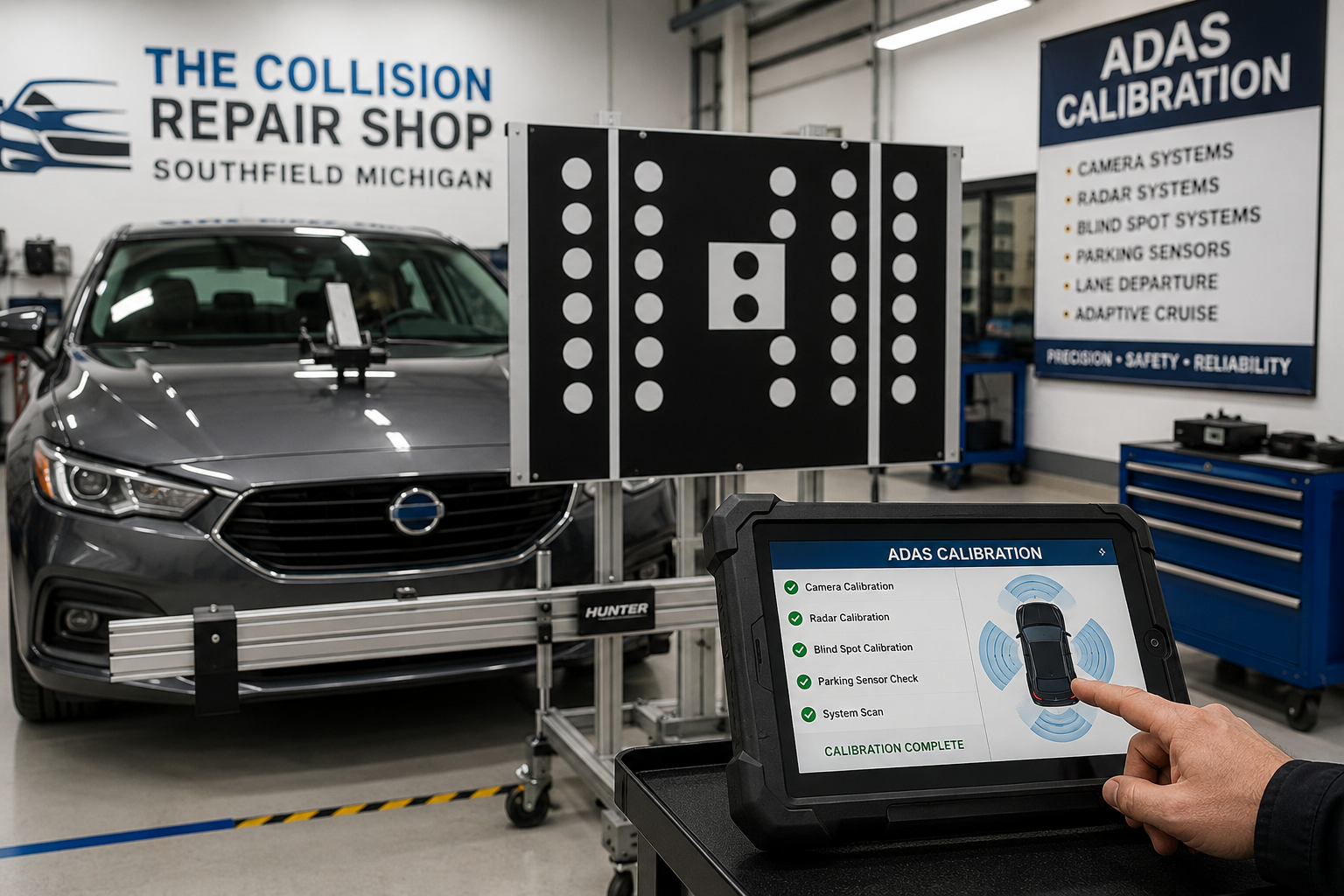
The Collision Repair Shop serving Southfield Michigan considers applicable diagnostic scanning and ADAS calibration procedures as part of the complete collision repair process. The exact procedures depend on the vehicle, installed equipment, collision damage and repairs performed.
What Is ADAS?
ADAS stands for Advanced Driver-Assistance Systems. These systems use cameras, radar, ultrasonic sensors and other technology to support certain driver-assistance functions.
Depending on the vehicle, ADAS technology can contribute to forward collision warnings, automatic emergency braking, adaptive cruise control, lane departure warning, lane keeping assistance, blind-spot monitoring, rear cross-traffic alerts, parking assistance and other features.
Because many of these sensors are mounted in bumpers, grilles, windshields, mirrors and body panels, a collision can affect ADAS equipment even when the electronic component itself does not appear visibly broken.
The mounting bracket, surrounding structure, vehicle alignment or component position can also be affected by collision damage.
Why Can ADAS Calibration Matter After an Accident?
ADAS components depend on their physical position, vehicle geometry and system configuration. Collision damage or certain repair procedures can potentially alter those relationships.
Sensor Position
Radar and cameras can depend on precise mounting locations and orientation. Collision damage may affect the component or its mounting area.
Vehicle Alignment
Suspension, steering and wheel-alignment changes can be relevant on vehicles where ADAS operation depends on vehicle geometry.
Parts Replacement
Replacing bumpers, grilles, windshields, mirrors or sensor brackets can trigger additional procedures depending on the vehicle.
Structural Repair
Structural collision damage can affect the relationship between the body, suspension and sensor mounting positions.
Camera Removal
Removing or replacing a forward-facing or other ADAS camera can require applicable calibration procedures.
Radar Removal
Radar modules and their mounting brackets should be considered when collision damage occurs near their installed locations.
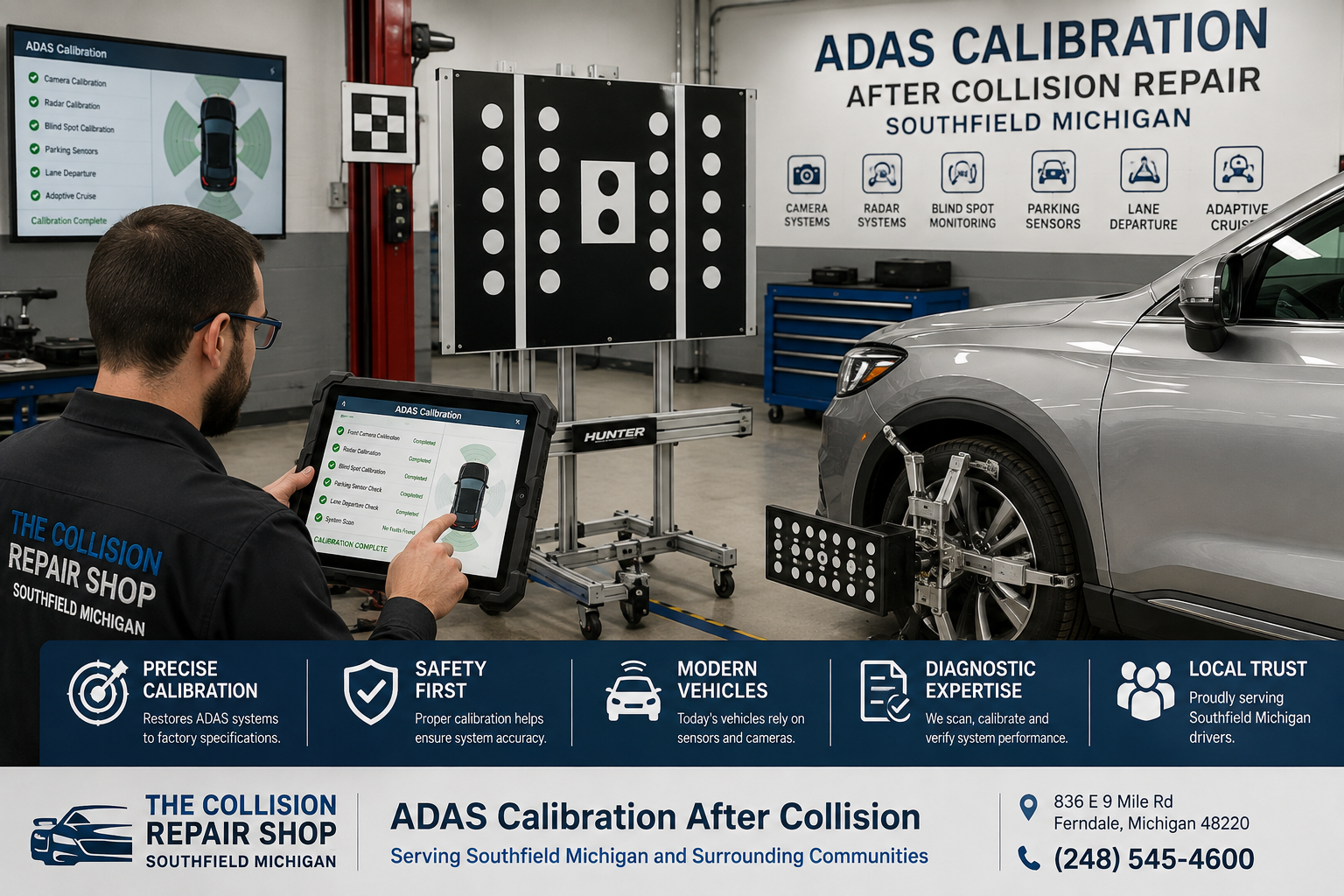
The Repair Is Not Finished Just Because the Body Panels Are Back Together
Modern collision repair can continue after structural repair, body work, paint and reassembly are finished.
Diagnostic scanning, system evaluation and applicable ADAS calibration procedures may still need to be addressed before the overall repair process is complete.
The exact requirements vary by manufacturer, vehicle, equipment and repair. That is why The Collision Repair Shop approaches ADAS as part of vehicle-specific repair planning instead of treating every car the same.
When Can Collision Repair Require ADAS Calibration?
Calibration requirements are based on the specific vehicle and procedures involved, not simply how severe the accident looks.
Windshield Replacement
Vehicles with windshield-mounted forward cameras may require applicable camera calibration after windshield replacement.
Front Bumper Repair
Radar units, parking sensors and other technology may be located in or behind the front bumper.
Grille Replacement
Some vehicles locate radar or related technology behind or near the grille, making the surrounding repair important.
Rear Bumper Repair
Rear bumpers can contain parking sensors, blind-spot radar and related brackets or wiring.
Side-Impact Repair
Side impacts can affect mirrors, blind-spot technology, rear radar, suspension and vehicle geometry.
Suspension Repair
Suspension damage and replacement can change vehicle geometry and may require related procedures on certain vehicles.
Wheel Alignment
Some vehicle manufacturers specify related procedures after wheel alignment or repairs affecting alignment.
Camera Replacement
Removal or replacement of an ADAS camera can require calibration depending on the system and vehicle.
Radar Replacement
Radar units can depend on precise mounting position and may require applicable procedures following replacement.
ADAS Systems That May Be Involved in Collision Repair
Manufacturer terminology varies, but modern vehicles can use many different driver-assistance systems.
Forward Collision Warning
Uses applicable sensors to help identify potential frontal collision situations and provide driver warnings.
Automatic Emergency Braking
Certain vehicles use camera or radar information to assist with braking under applicable conditions.
Adaptive Cruise Control
Uses applicable sensor information to help manage following distance under specified conditions.
Lane Departure Warning
Forward camera technology can identify lane markings and provide applicable warnings.
Lane Keeping Assistance
Certain vehicles provide steering assistance using information from lane-detection systems.
Blind-Spot Monitoring
Rear or side radar can help identify vehicles located in applicable blind-spot areas.
Rear Cross-Traffic Alert
Rear sensors can assist with detecting traffic approaching while backing on equipped vehicles.
Parking Sensors
Ultrasonic sensors can provide parking-distance information and are frequently mounted directly in bumper covers.
Surround-View Cameras
Multiple cameras can work together to create a composite view around an equipped vehicle.
Front-End Accidents Can Involve Technology Hidden Behind the Bumper
A modern front bumper can contain far more than a bumper cover and reinforcement.
Depending on the vehicle, radar, parking sensors, cameras, brackets, wiring and other electronic components can be located throughout the front of the vehicle.
Collision forces may damage a sensor directly or alter the bracket or body structure supporting that sensor.
Front-End Collision Repair Southfield MIRear Bumper Damage Can Affect Blind-Spot & Parking Technology
Rear collision damage is another example where the bumper cover may hide important electronic systems underneath.
Depending on the vehicle, blind-spot radar modules may be mounted behind the rear bumper or adjoining quarter-panel areas. Parking sensors may also be installed directly into the bumper.
Rear collision damage can affect sensors, brackets, wiring or the body areas supporting these components.
Rear-End Collision Repair Southfield MISide Collisions Can Affect Cameras, Radar, Suspension & Vehicle Geometry
Side impacts can involve doors, mirrors, rocker panels, pillars, quarter panels, wheels, suspension and surrounding body structure.
Mirrors may contain cameras or blind-spot indicators. Rear body areas can contain radar technology, while wheel and suspension damage can alter alignment and vehicle geometry.
This is another situation where collision repair, mechanical repair and ADAS procedures can become interconnected.
Side-Impact Collision Repair Southfield MIDiagnostic Scanning and ADAS Calibration Are Not the Same Procedure
They can both be important parts of modern collision repair, but they serve different purposes.
Pre-Repair & Post-Repair Scans
Diagnostic scanning communicates with electronic control modules and can identify stored diagnostic trouble codes or system conditions when applicable.
Establishing Applicable Sensor References
Calibration can establish or verify the required reference for applicable cameras, radar units or other ADAS components according to the specified procedure.
Can a Vehicle Require ADAS Calibration Without a Dashboard Warning?
Depending on the vehicle and repair procedure, the absence of a dashboard warning does not necessarily determine whether calibration is required.
Electronics Can Still Communicate
A camera or radar component may remain electronically connected even though collision damage or repair work has affected its physical mounting relationship.
Repair Procedures Determine the Requirement
Removal, replacement, alignment changes or repairs involving certain components can trigger applicable procedures regardless of whether a warning light is displayed.
Static Calibration, Dynamic Calibration & Vehicle-Specific Requirements
There is no single universal ADAS calibration method for every vehicle.
Static Calibration
Static procedures can use targets, equipment, measurements and vehicle positioning while the vehicle remains stationary.
Dynamic Calibration
Certain vehicles use a driving procedure performed under specified conditions as part of the applicable calibration process.
Vehicle-Specific Requirements
The required method depends on the manufacturer, vehicle, installed systems and repairs that were performed.
Modern Windshields Can Be Part of the ADAS System
Many newer vehicles position a forward-facing camera near the upper center of the windshield.
Depending on the vehicle, that camera may support lane departure warning, lane keeping assistance, forward collision warning or other driver-assistance functions.
When a windshield containing an ADAS camera is replaced, the applicable vehicle procedures should be reviewed to determine what additional steps are required.
Collision Damage to Wheels or Suspension Can Affect More Than Alignment
ADAS systems can depend on relationships between the vehicle body, wheels, steering, ride height and roadway. Suspension damage therefore deserves attention beyond simply replacing the visible damaged component.
Curb Impacts
Sliding into a curb can damage wheels, tires, suspension and steering and alter vehicle alignment.
Suspension Replacement
Replacing damaged suspension components can change vehicle geometry and may trigger related procedures depending on the vehicle.
Wheel Alignment
Certain vehicles can require steering-angle or other related procedures after alignment.
What If the Original Insurance Estimate Does Not Include Calibration?
An initial insurance estimate can be written before all repair requirements are known.
As a vehicle is inspected, researched or disassembled, additional collision-related repair needs can become apparent.
When an applicable ADAS procedure is identified as part of the collision repair, The Collision Repair Shop can document the requirement and communicate the additional operation during the claim process.
Insurance coverage and authorization remain subject to the applicable policy and claim, but legitimate repair requirements should not simply be ignored because they were absent from the initial estimate.
Insurance Collision Repair Southfield MIFrom Collision Inspection to Applicable Calibration
We integrate the vehicle's electronics and driver-assistance technology into the overall repair-planning process.
Identify the Vehicle
Year, make, model, trim and equipment help determine which systems and procedures may apply.
Inspect the Collision Damage
We evaluate damage locations and consider nearby cameras, radar, sensors and mounting areas.
Diagnostic Evaluation
Applicable scanning can identify stored faults or electronic-system conditions.
Research Applicable Requirements
Repair planning considers the specific vehicle and procedures associated with the repair.
Complete Collision Repairs
Body, structural, mechanical and refinishing operations are completed according to the repair plan.
Perform Applicable ADAS Procedures
Required scanning, calibration or related procedures are addressed when applicable to the vehicle and repair.
Final Repair Review
The overall repair is reviewed before the vehicle is returned to the customer.
The Technology Behind the Bumper Matters Just as Much as the Paint on the Outside
Modern collision repair requires attention to body structure, mechanical components, electronics, cameras, radar and driver-assistance technology. The Collision Repair Shop serving Southfield Michigan approaches ADAS-equipped vehicles as complete vehicles rather than treating electronic systems as an afterthought.
Explore Related Collision Repair Services in Southfield Michigan
ADAS calibration is frequently connected to other collision repair operations. These Southfield repair guides provide more detailed information about each area.
Southfield Michigan Collision Shop
Learn about complete collision repair, auto body repair, insurance assistance, deductible assistance, rental vehicles, parts and our complete repair process.
Main Southfield Collision PageInsurance Collision Repair Southfield MI
Learn about insurance estimates, supplements, replacement parts, deductible assistance, rental vehicles and claim coordination.
Insurance Collision RepairFront End Collision Repair Southfield MI
Learn about front bumpers, hoods, grilles, radar, cooling components, structural damage and front suspension.
Front-End Collision RepairRear End Collision Repair Southfield MI
Learn about rear bumpers, blind-spot radar, parking sensors, rear body panels, liftgates and quarter panels.
Rear-End Collision RepairSide Impact Collision Repair Southfield MI
Learn about doors, mirrors, pillars, rockers, quarter panels, wheels, suspension and side-impact technology.
Side-Impact Collision RepairPaint & Auto Body Repair Southfield MI
Learn about body repair, panel replacement, color matching, metallic and pearl finishes, blending and professional refinishing.
Paint & Auto Body RepairWinter Collision Repair Southfield MI
Snow and ice accidents can damage wheels, suspension, steering, bumpers, sensors and ADAS-related components. Learn what to consider after a Michigan winter accident.
Winter Collision RepairFrequently Asked Questions About ADAS After Collision Repair
These are some of the questions Southfield drivers commonly have about cameras, radar, diagnostic scanning and calibration after an accident.
What does ADAS stand for?
Does every collision require ADAS calibration?
Can bumper replacement require ADAS calibration?
Can windshield replacement require camera calibration?
Is diagnostic scanning the same as ADAS calibration?
Can calibration be required without an ADAS warning light?
Can wheel alignment affect ADAS?
Does insurance pay for ADAS calibration after a collision?
What happens if calibration was not included on the original estimate?
Can a rear-end collision affect blind-spot monitoring?
Can side-impact damage affect ADAS?
Where is The Collision Repair Shop serving Southfield located?
Modern Collision Repair Does Not End When the Last Body Panel Is Installed.
Cameras, radar, blind-spot systems, parking sensors, suspension, diagnostics and other advanced technology can all become part of a modern collision repair. The Collision Repair Shop serving Southfield Michigan considers applicable ADAS procedures as part of repairing the complete vehicle.